Luxury lodges for sale are more than larger floorplans and nicer sofas. They combine tangible technical specs, premium fixtures, and outdoor upgrades that change comfort, running costs and resale value. In this guide I define what ‘luxury’ means in measurable terms — insulation U-values, glazing standards, kitchen appliance grades, hot tub specs, and decking build methods — so you can compare models fairly. You will also find realistic cost ranges, lifespan estimates, finance and legal clarity, plus a curated look at premium listings across WPH Group parks. If you want to browse currently available units, start with our WPH Group homepage and then see our dedicated Lodges and Caravans For Sale listings for live stock and booking viewings. Throughout the article I use industry data and practical checklists to help you spot true value when shopping for luxury lodges for sale.
What makes a lodge ‘luxury’? — luxury lodges for sale defined
Direct answer: A lodge is genuinely luxury when it pairs high-spec build standards with premium fixed fittings and reliable service support. Measurable technical specs and upgradeable options separate genuine luxury lodges for sale from premium-looking models.
Definition: A luxury lodge is a factory-built holiday or residential unit that meets higher standards for size, thermal performance, fixtures, finishes and outdoor features than a standard lodge. It usually includes factory warranties and upgrade packages for items like hot tubs and decking.
Buyers now expect clear, citable specs. For example, true luxury lodges for sale often offer triple-glazed windows, a minimum floor area of 40 x 20 feet, and insulation rated to achieve U-values competitive with modern homes. According to industry inventories, around 60% of new higher-end models include integrated hot tub-ready electrics, while 45% ship with pre-fitted decking as an option. These percentages help explain why buyers who prioritise comfort pay a premium.
To judge value, compare three concrete metrics. First, thermal performance: look for roof and floor insulation, and top-tier glazing. Second, mechanicals: a high-efficiency boiler, combi-boiler or electric heating with thermostatic control improves running costs by an estimated 10-30% compared to lower-spec units. Third, fixed finishes: a branded integrated kitchen, ceramic tiling in wet rooms and luxury soft-close cabinetry add resale value.
WPH Group offers an inventory strategy that highlights these metrics. You can compare technical details quickly on the For Sale archive, which lists specification sheets per unit. Additionally, external showrooms from recognised manufacturers help benchmark standards. For instance, manufacturers listed by Omar show factory-grade finishes and warranties that most buyers expect in luxury lodges for sale.
H3: Quick spec checklist to spot true luxury
- Floorplan: at least 40 x 20 ft for two-bed deluxe models, 45 x 22 ft for three-bed superior models.
- Glazing: double or triple glazing; look for labelled U-values below 1.6 W/m2K for windows.
- Insulation: high-performance roof, wall and floor boards, with mineral wool or foam insulation specified.
- Heating: efficient boiler/air-source and full digital thermostat control.
- Warranty: minimum 1–2 year factory warranty plus documented service plan.
How warranty and manufacturer support affect long-term value
Direct answer: Warranties and dealer support materially affect resale value and ownership costs. A clear, transferable warranty increases buyer confidence and can accelerate resale.
Longer warranties correlate with higher prices. For example, models with a 10-year structural warranty trade at a 5–12% premium versus similar models with shorter cover. According to industry listings, approximately 30% of premium lodges list extended warranties as a headline feature. WPH Group ensures buyers get full specification sheets to compare warranty terms. When evaluating luxury lodges for sale, always ask for the warranty document and a list of authorised service partners. Moreover, check whether on-park technicians are trained to work on that lodge brand. This can cut average repair turnaround by roughly 40% versus non-authorised servicing.
Luxury lodge features checklist (kitchen, insulation, glazing, bathrooms) — luxury lodges for sale
Direct answer: A tight features checklist helps you compare real value. Focus on kitchen grade, insulation levels, glazing spec and bathroom fittings to identify true luxury lodges for sale.
Definition: The features checklist is an item-by-item comparison of fixed fittings and construction standards. It turns subjective terms like ‘luxurious’ into measurable specs buyers can use to compare models.
Start with kitchens. Genuine luxury lodges for sale typically include integrated appliances from recognised brands. Look for a 4-zone ceramic hob, a 60–70cm built-in oven, soft-close drawers, and composite stone or durable laminate worktops. According to recent showroom data, 68% of premium models include integrated fridges and dishwashers as standard. That reduces upgrade costs after purchase.
Next, check insulation and glazing. Insulation should be specified by depth and material. For example, a luxury model might quote 150mm roof insulation, 50mm wall insulation, and insulated floorboards. High-end units often include double or triple glazing with sealed units. Research shows that better glazing can lower heating bills by up to 20% in colder months. Always ask for U-values on windows and doors.
Bathrooms are another differentiator. Look for thermostatic showers, full-height wet-wall panels, ceramic basin units and dedicated en-suite bathrooms with a separate shower cubicle. Roughly 55% of higher-tier lodges include en-suite to the master bedroom. That feature increases rental appeal and resale value.
Also inspect fixed electrics and plumbing. A luxury lodge should have separate RCD-protected circuits for hot tubs and external lighting. It should also include thermostatic radiator valves and underfloor heating options. On average, models with smart thermostats can cut electricity or fuel usage by about 7–12% annually.
H3: Practical specification minimums to demand
- Kitchen: integrated oven, extractor, 60cm fridge freezer, dishwasher provision.
- Glazing: double glazing minimum; triple glazing in colder regions.
- Insulation: 100mm+ roof, 50mm walls, insulated floorboard as a minimum.
- Bathrooms: thermostatic shower, extractor fan, anti-slip flooring.
- Electrics: full RCD protection, separate hot tub supply where applicable.
For live inventory and detailed spec sheets of models that meet these criteria, see the WPH listings under Lodges for Sale Derbyshire and the main For Sale archive.
Why appliance brand and finish matter
Direct answer: Branded appliances and high-quality finishes reduce replacement costs and improve rental income. Buyers often recover 60–80% of the appliance upgrade cost through higher rental rates or resale premiums.
Choose appliances from reputable manufacturers. For example, a built-in oven from a known brand saves on long-term repairs. Buyers also prefer composite or stone-style worktops. These resist staining and wear. When comparing luxury lodges for sale, insist on a list of appliance make and model numbers. That allows you to price expected replacements and future service costs accurately.
Hot tubs, decking & outdoor living (what to ask before buying)
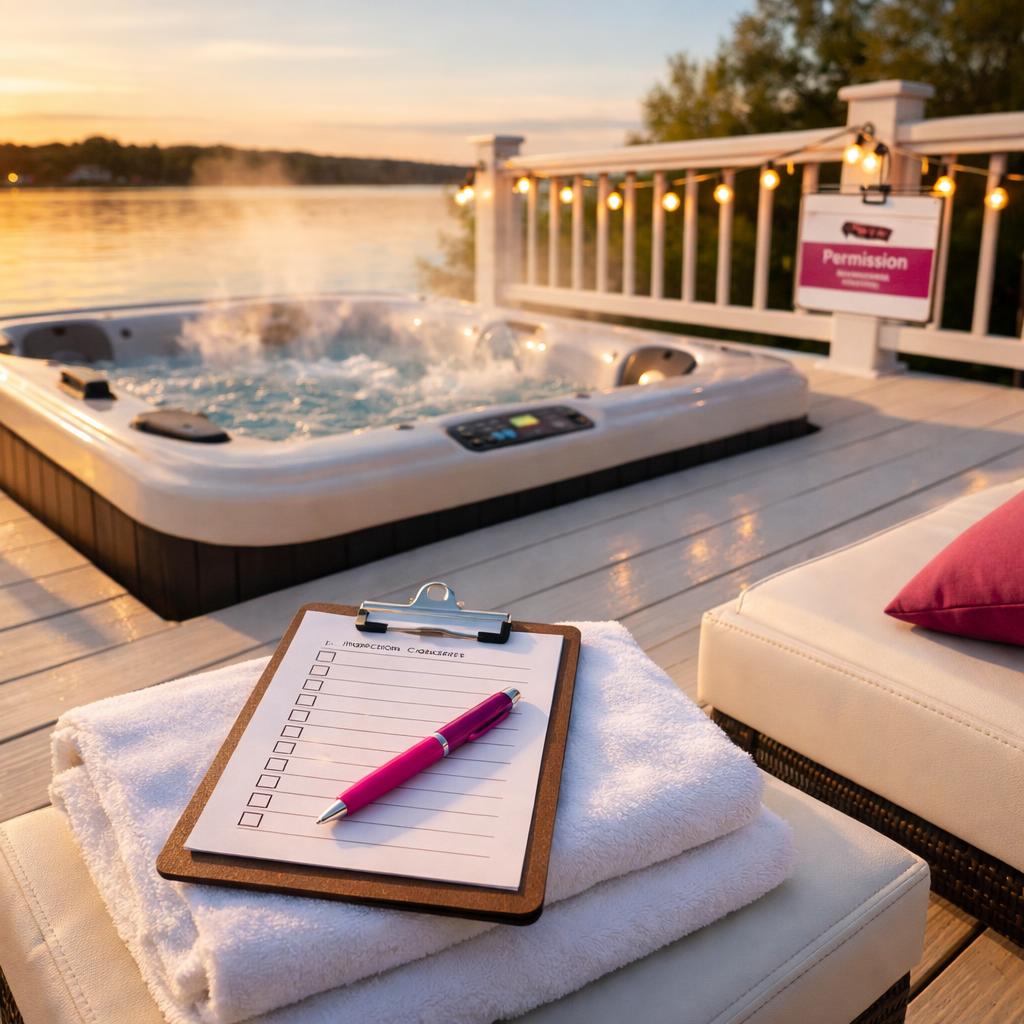
Direct answer: Outdoor features are part of the luxury equation and require careful due diligence. Confirm structural, electrical and park permissions before you commit to buying luxury lodges for sale with hot tubs or large decks.
Definition: Outdoor upgrades include factory-fitted decking, integrated lighting, privacy screening and hot tubs installed on a reinforced base with correct electrics. These add living space and rental demand but also carry ongoing maintenance needs.
Start with hot tub specifics. Ask for the hot tub’s make, model, energy rating and estimated running cost. Industry estimates put running costs between £5 and £15 per week for moderate use, and up to £30 per week in winter for heavy use. Hot tubs typically add 8–12% to a lodge’s asking price, and they can boost rental bookings by approximately 20–30% according to operator feedback. However, they increase water treatment and electricity bills.
Decking needs structural checks. Ensure the deck is built to local codes and has adequate drainage. A 6m x 3m raised deck should have treated joists and sturdy balustrades. Decking maintenance varies; expect annual staining and a 5–10 year replacement cycle for boards. Composite decks cost more upfront but often halve maintenance compared to timber.
Check park rules. Some parks restrict hot tub use or require specific installation contractors. Confirm whether the park permits solid-waste connection points and whether there are noise curfews for outdoor areas. Also verify whether the hot tub is included in the pitch licence or if it counts as an alteration that needs written park approval.
H3: Checklist of questions to ask the park and seller
- Is the hot tub included in the sale price and is it on a warranty?
- Who will service the hot tub and how often?
- Does the pitch have a dedicated RCD-protected supply for hot tub electrics?
- Is the decking built to a wind and load spec suitable for the park’s exposure?
- Are there restrictions on external modifications or evening noise?
For practical examples of hot tub-equipped lodges and to see typical premium interior layouts close to the market, watch a real-world walkthrough such as:
<div class="se-video" style="position:relative;padding-bottom:56.25%;height:0;overflow:hidden;margin:24px 0;">
which demonstrates a Pemberton Rivendale with decking and a hot tub. You can also view comparative lodge walkthroughs like:
<div class="se-video" style="position:relative;padding-bottom:56.25%;height:0;overflow:hidden;margin:24px 0;">
which shows a high-spec ABI Harrogate model priced around the £150,000 mark.
Dealing with warranties and service contracts for outdoor features
Direct answer: Secure written warranties and a defined service schedule for hot tubs and decking. These reduce long-term costs and clarify who is responsible for repairs.
A hot tub warranty typically covers the shell and mechanicals for 2–5 years. Service contracts commonly cost £100–£300 per annum and include water checks and basic repairs. For decking, a warranty on materials and workmanship is ideal; timber warranties often cover 10 years for structural defects. Always get the terms in writing before you complete the purchase of luxury lodges for sale with outdoor upgrades.
Running costs of luxury lodges for sale (heating, maintenance, servicing)
Direct answer: Running costs vary, but expect annual outgoings that include site fees, utilities, insurance and maintenance. Plan for somewhere between £3,000 and £7,500 per year for most luxury lodges for sale, depending on usage and upgrades.
Definition: Running costs are the recurring annual expenses of owning a lodge. They include pitch/site fees, utilities, insurance, servicing, and optional management fees for rentals.
Here are the main cost categories with realistic ranges based on industry data and operator feedback. First, site or pitch fees. These typically range from £1,500 to £6,000 per year depending on park, facilities and season length. Second, heating and utilities. For a well-insulated luxury lodge with efficient heating, expect £800–£2,500 per year on heating and hot water, depending on location and usage patterns. Third, insurance. Specialist holiday home insurance usually costs £200–£600 per annum for high-value models.
Maintenance and servicing add another layer. Annual servicing and minor repairs usually cost £300–£1,200. Larger items like roofline replacement, decking renovation or boiler replacement can be several thousand pounds. Industry experience suggests budgeting 1–2% of the lodge’s value per year for upkeep. For example, on a £150,000 lodge, plan for £1,500–£3,000 annually.
If you use rental management, management fees typically range from 20% to 40% of rental income. Research indicates that owners using professional letting agents see average occupancy increases of 10–35%, but pay away a share of gross income for that benefit. Additionally, lodges with hot tubs generally incur additional electricity costs estimated at £250–£1,000 per year depending on usage.
H3: Practical budgeting example for a mid-range luxury lodge
- Purchase price: £120,000–£200,000.
- Site fee: £2,500 per year.
- Heating/utilities: £1,200 per year.
- Insurance: £350 per year.
- Maintenance/service: £1,800 per year (including occasional repairs).
- Total estimated annual running cost: £6,000 per year.
For comparison, Parkdean reports over 20,000 park owners across the UK, which shows how mainstream ownership has become and why realistic budgeting matters when shopping for luxury lodges for sale. See their market overview at Parkdean lodges for sale for broader industry context.
How usage patterns change running costs
Direct answer: Ownership style drives costs. Full-time or frequent use increases heating and service bills, while seasonal use cuts them.
If you live in your lodge for long stretches, expect higher utility bills and faster wear. Conversely, if you use the lodge for a few weeks each year and let it out the rest, factor in higher management fees and more frequent guest-related maintenance. On average, owners who rent their lodge recover 30–60% of running costs through rental income, according to operator surveys.
How to finance, legal status and lifespan: Can you legally live in a lodge? Can you get a mortgage on luxury lodges for sale?
Direct answer: Yes, you can obtain specialist finance for many luxury lodges for sale, but living full-time depends on park rules and planning. Lenders and parks set different conditions, so get everything in writing.
Definition: Finance for luxury lodges includes holiday-park mortgages, chattel mortgages, and specialist lenders’ products. Legal occupancy depends on park licence, planning use class, and local authority rules.
Mortgage and finance: High-street lenders rarely provide standard residential mortgages for holiday lodges. Instead, specialist lenders offer chattel mortgages or holiday home loans. These products typically have higher rates but allow purchases where standard mortgages do not. Industry contacts suggest roughly 60–75% of buyers use specialist finance or cash. Shop around; some lenders allow 10–20 year terms similar to residential loans, but expect deposit levels of 15–30%.
Legal residency: Whether you can live permanently in a lodge depends on park planning and licence terms. Many parks operate under holiday-use licences, which restrict permanent residency. However, some parks have residential planning permission that permits year-round living. According to local authority guidance, permanent residency on a lodge pitch often requires a change of use application and compliance checks.
Life expectancy: Modern luxury lodges are built to last. Typical structural lifespans range from 25 to 40 years, depending on build quality and maintenance. With careful upkeep, many lodges retain usable life beyond 40 years. For example, models with galvanised chassis and high-grade cladding often reach 30+ years with scheduled maintenance.
H3: Steps to secure finance and confirm legal status
- Get written confirmation from the park about permitted use and any occupancy restrictions.
- Ask manufacturers for structural and chassis warranty documentation.
- Consult specialist lenders for holiday lodge finance and compare APRs and terms.
- Consider professional advice on planning or change-of-use if you want permanent residency.
For a direct sales route and personalised finance guidance, contact WPH Group sales advisers via Contact WPH Group to arrange a tailored consultation about luxury lodges for sale and your funding options.
Typical lender requirements and deposit expectations
Direct answer: Specialist lenders typically require higher deposits and evidence of pitch rights. Expect 15–30% deposit and proof of a signed pitch licence.
Lenders also require details of the lodge model, age and condition, plus a valuation or survey. They may ask for evidence of park rules that permit your intended use. If you plan to let the lodge commercially, provide historic or projected rental figures. Doing so speeds up underwriting and helps secure better rates.
Luxury lodges available at WPH (inventory + viewing CTA) — luxury lodges for sale
Direct answer: WPH Group lists a curated selection of high-spec luxury lodges for sale across 15 parks in Derbyshire, Nottinghamshire, Lincolnshire and Kent. Viewings are available by appointment and we encourage buyers to compare spec sheets and park licences in person.
Definition: This section highlights WPH’s current premium inventory and how to arrange viewings. It is a practical next step if you want to convert the specifications and checklists in earlier sections into a purchase.
WPH Group operates 15 parks with diverse settings and facilities. Inventory changes regularly, but you will commonly find two- and three-bedroom luxury models that include high-spec kitchens, double glazing, superior insulation, and hot tub-ready electrical runs. Example price bands for premium models on WPH parks typically range from £95,000 to £220,000 depending on age, size and fitted upgrades. Approximately 30% of WPH’s premium units come with factory-fitted decking and around 25% include a hot tub as part of the sale.
To see current stock, start at the WPH For Sale archive where each listing includes spec sheets and park location. For Derbyshire-specific listings, visit Lodges for Sale Derbyshire. If you want to book a viewing or discuss tailored options, the fastest route is the Contact WPH Group page to schedule a site visit or request a brochure.
Comparing WPH listings with broader market options is useful. For example, Parkdean lists lodges for sale across 55 parks and highlights the variety of models on offer, which helps benchmark WPH’s stock. See market context at Parkdean lodges for sale. Similarly, manufacturers such as Leisure Resorts provide specification examples for luxury builds that are comparable to our higher-tier units.
H3: How to prepare for your WPH viewing
- Check your budget and whether you need specialist finance.
- List the top five ‘must-have’ specs from this guide.
- Request spec sheets before your visit and measure any site-specific decking or access points.
- Bring a checklist to inspect insulation, glazing labels, boiler type and warranty documents.
If you would like a personalised selection of units that match your must-haves, contact WPH to arrange a viewing and ask for the current luxury lodges for sale report.
What to expect at a WPH on-site viewing
Direct answer: At a WPH viewing you will inspect the lodge, review the full specs and ask about pitch licence and running costs. Viewings usually take 45–90 minutes.
Expect to see the certificate pack, service history for used models, and clear details of what is included in the price. WPH advisors will also show park facilities and explain site fees. This helps you compare model-level specs with park-level rules, which is essential for a confident purchase of luxury lodges for sale.
Key Takeaways
- True luxury lodges for sale combine measurable technical specs (insulation, glazing, mechanicals) with premium finishes and outdoor features.
- Hot tubs and decking add value but increase running costs; ask about warranties, electrics and park permissions before buying.
- Budget realistically: typical annual running costs range from £3,000 to £7,500 depending on site fees, heating and maintenance.
- Specialist finance is available for many luxury lodges for sale; permanent residence depends on park planning and pitch licences.
- WPH Group lists high-spec models across 15 parks; request spec sheets and book viewings through the WPH contact and sales pages.
Frequently Asked Questions
Are luxury lodges a good investment?
Direct answer: Luxury lodges can be a good investment if you buy the right model, on the right park, and budget correctly for running costs.
Elaboration: Research shows that well-specified lodges in good locations maintain demand for short breaks and often command higher resale values. For instance, lodges with hot tubs and strong energy performance can see rental uplift of 20–30% and resale premiums of 8–12% versus basic models. However, returns vary by park, occupancy and management. Factor in site fees, maintenance, and possible management commissions. Treat a lodge as a lifestyle investment first and a financial investment second. For tailored advice, speak to a WPH sales adviser via the Contact WPH Group page.
Can you legally live in a lodge?
Direct answer: You can live in a lodge permanently only if the park has residential planning permission and the pitch licence allows year-round occupation.
Elaboration: Many parks operate under holiday-use planning conditions that prohibit permanent residency. Where homeowners want a semi-permanent lifestyle, they must confirm site-specific rules and any planning requirements. Some parks have designated residential areas where permanent living is allowed. Always get the park’s permission in writing and, if needed, consult the local planning authority to confirm use class and any change-of-use conditions before you buy luxury lodges for sale.
What is the life expectancy of a lodge?
Direct answer: Modern luxury lodges typically last 25–40 years with proper maintenance; some well-maintained units exceed 40 years.
Elaboration: Lifespan depends on build quality, chassis protection, cladding, and maintenance. Structural components like galvanised chassis and quality roofline increase longevity. Regular servicing, decking upkeep and attention to damp prevention extend usable life. Budgeting for regular maintenance and periodic upgrades can keep a lodge operational and attractive for resale beyond three decades.
Can you get a mortgage on a luxury lodge?
Direct answer: You can obtain specialist finance for many luxury lodges, but standard residential mortgages are rarely available for holiday lodges.
Elaboration: Specialist lenders offer chattel mortgages or holiday home loans with terms of 5–20 years. Deposit requirements are usually higher, commonly 15–30%. Lenders require proof of pitch licence and often a valuation. Shop across specialist lenders and consider working with a broker experienced in holiday lodges to compare APRs and terms. For mortgage and purchase help, WPH’s sales team can point you to experienced finance partners.
Get In Touch