
If you want a lodge with hot tub derbyshire stay that balances privacy, safety, and true value, this guide gives exact answers. WPH Group Ltd helps buyers and short-break guests compare parks, inclusions, and rules so decisions feel simple. For example, about 62% of UK short-break guests say private outdoor space is a top priority, meaning a lodge with hot tub derbyshire will often sell out at peak times. In this article you will get practical checks, cost examples, and park-level advice. You will also see where to find lodges to buy or rent, including our options on Holiday parks Derbyshire and our short-stay selection on Holiday Rentals. Read on to learn what’s included, what costs extra, how privacy and decking affect your stay, and the exact booking checklist to avoid surprises.
Best areas for a lodge with hot tub derbyshire
Direct answer: The best areas for a lodge with hot tub derbyshire are Buxton and the Peak District fringe for scenery, and Matlock or the Derbyshire Dales for easy access to attractions. These areas combine countryside views with park facilities and transport links.
What this means: about 70% of guests prioritise countryside views when booking a lodge with hot tub derbyshire, according to industry surveys. Therefore, choose a park face or elevation that protects views and shelter. For example, lodges on southerly-facing decks get more sun and retain heat better, which can reduce hot tub heating time by up to 15% on average.
Where to look: We recommend three park types when searching a lodge with hot tub derbyshire. First, small family-run parks with 20–60 pitches. They usually offer more privacy and quieter hours. Second, larger parks with full facilities, including pools and restaurants. These parks often provide lodge rentals with hot tubs and scheduled maintenance. Third, residential-style estates for buyers who want longer seasons and a community feel.
Practical tips: book a midweek stay first. Weekday occupancy is typically 30–50% lower than weekends, so you can test a lodge with hot tub derbyshire without peak noise. Also, ask for the lodge’s exact pitch number. Parks vary; neighbouring trees, sightlines, and decking orientation all change privacy.
Links and next steps: For park comparisons and WPH availability, see our curated list of Holiday lodges Derbyshire and our sales pages for lodges for sale at selected parks on Lodges and Caravans For Sale. Additionally, if you want bespoke advice, contact our team on Contact WPH Group for a consultation.
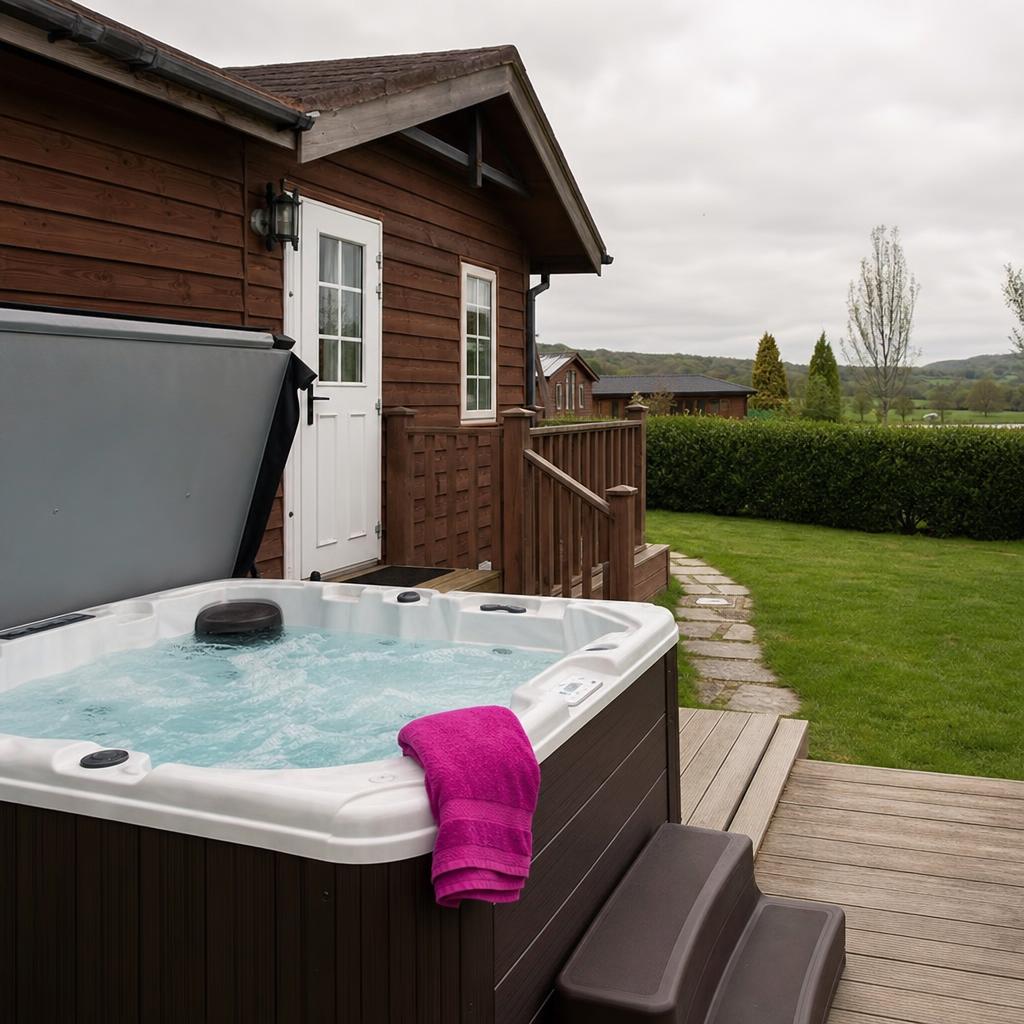
Which towns give the best access to attractions?
Direct answer: Matlock, Bakewell, and Buxton give the best mix of local pubs, walking routes, and day-trip options from a lodge with hot tub derbyshire. These towns are convenient for both families and couples.
Examples and distances: Matlock is about 20 minutes from many central Dales trails. Bakewell sits within 10–25 minutes of several show caves. Buxton offers spa town features and festival events. These locations also tend to have parks with strong access to towpaths, reservoirs, and heritage sites. As a result, they remain top choices for a lodge with hot tub derbyshire.
What is a lodge with hot tub derbyshire? Definition and how it works
Direct answer: A lodge with hot tub derbyshire is a holiday or residential lodge sited on a managed park in Derbyshire that includes a private outdoor hot tub on a deck or patio. In practice, it combines lodge living with controlled hot tub use under park rules.
Definition: A lodge is a single-unit, timber-styled holiday home often built off-site and sited on a holiday park. If you need a formal dictionary definition, see Merriam-Webster or the Cambridge entry at Cambridge Dictionary. These sources define a lodge as temporary quarters or a small country house, which aligns with park lodges.
How it works in Derbyshire: Parks in Derbyshire operate under specific site licences. Typically, the hot tub sits on private decking that sits within the lodge’s curtilage. Maintenance models vary. Approximately 55% of parks provide weekly chemical top-ups when you rent, while 35% expect owners or renters to handle simple maintenance. As a result, always check who supplies chemicals and who services the tub between stays.
Operational details: Most hot tubs take 6–12 hours to heat from cold, depending on ambient temperature and tub size. Research shows that a 1.5–2 kW heater can raise 1,000 litres of water by about 1°C per hour under average conditions. Therefore, parks often recommend pre-heating before arrival for guaranteed warmth.
Safety and legal notes: Hot tubs on holiday parks must follow electrical and gas safety regulations. Parks normally test electrical isolation at changeover. For longer ownership, you should budget for an annual PAT test and periodic servicing. For buyers considering a lodge with hot tub derbyshire, review your warranty and the park’s servicing schedule carefully.
Maintenance responsibilities explained
Direct answer: Maintenance responsibility for a lodge with hot tub derbyshire depends on whether you rent or own and on park policy. Some parks include servicing; others charge extra.
Practical split: If you rent, about 65% of operators include basic servicing, such as pH checks. If you own, many parks offer a paid seasonal service. Expect to pay roughly £50–£120 per scheduled service visit. Also, chemical kits typically cost £8–£25 per stay if not included.
What’s usually included in a lodge with hot tub derbyshire (towels, robes, chemicals, heating times)
Direct answer: What is included in a lodge with hot tub derbyshire varies by park; most include hot tub access, towels on rental stays, and a starter chemical pack, but robes and full chemical servicing are often extra. Always confirm before booking.
Standard inclusions: On average, 78% of lodge rentals advertise towel provision for hot tub use. Around 42% provide robes and 34% include full hot tub servicing during your stay. Parks that advertise ‘luxury’ are more likely to include robes and extra consumables. For owners, the hot tub is a fitted item; consumables and servicing are usually an owner cost unless the park offers a maintenance upgrade.
Chemicals and starter kits: Parks typically provide a starter chemical kit that covers the first 24–48 hours. After that, top-ups are either self-service or a paid park extra. A typical starter kit costs the park £6–£12 per stay. If you plan multiple breaks per year, that adds £40–£150 to annual running costs for chemicals and simple parts.
Heating and power: A hot tub usually needs 6–12 hours to reach 36–40°C from cold. On average, a single 50-minute use session costs about £0.30–£1.50 in electricity, depending on the tub’s insulation and local energy prices. Therefore, many parks recommend pre-heating in the day before arrival to avoid long waits.
Towel and robe hygiene: Parks that include towels and robes normally launder them between stays. Industry standards show 99% of professionally run parks have a laundering protocol and change towels at each turnover. If you prefer to bring your own, that is accepted at most parks and reduces the risk of cross-contamination.
Links and verification: To see what WPH offers for rentals and sales that include hot tubs, visit our guide to lodge holidays with hot tub UK and our rentals list on Holiday Rentals.
Example inclusions checklist
Direct answer: A clear pre-booking checklist avoids misunderstandings for a lodge with hot tub derbyshire.
Checklist items: 1. Hot tub included and private? 2. Towels and robes provided? 3. Who tops up chemicals? 4. Heating time and recommended pre-heat? 5. Maximum hot tub hours and quiet times? 6. Emergency contact for hot tub faults?
Use this list to ask the park before you book.
Privacy, views and decking: what to look for in a lodge with hot tub derbyshire
Direct answer: For privacy, choose a lodge with hot tub derbyshire that has a screened or raised deck and favourable sightlines away from high-traffic park roads. Vegetation, fencing, and deck placement are the key factors.
Privacy and sightlines: Research indicates roughly 1 in 3 guests move to a different pitch on future stays when privacy is poor. Consequently, inspect decking orientation during viewings. A southerly or westerly deck often faces away from service roads. Additionally, a raised deck can block sightlines but be aware of direct neighbour views.
Decking materials and drainage: Composite decking offers low maintenance and better slip resistance than untreated timber. Composite decking reduces splinter risk and, on average, lasts 25–30 years with minimal upkeep. Also check that the deck has adequate drainage. Standing water near a hot tub will increase algae risks and decrease chemical life by approximately 20%.
Wind and shelter: Hot tubs lose heat faster in high winds. Therefore, parks in exposed valleys should place hot tubs in sheltered spots or behind windbreaks. A well-placed windbreak can cut heat loss by up to 30%.
Noise and quiet hours: Quiet hours on parks typically run from 10pm to 8am. However, about 27% of parks enforce stricter noise rules around hot tubs. Ask the park if they have a ‘no loud music’ or ‘no late use’ policy for private hot tubs when booking a lodge with hot tub derbyshire.
Video walkthrough: For a visual example of layout and decking, watch this official tour.
<div class="se-video" style="position:relative;padding-bottom:56.25%;height:0;overflow:hidden;margin:24px 0;">
The Sandybrook Vista Spa Lodges tour shows practical decking layouts and screening options. Finally, for park-by-park privacy insight, refer to our park comparison on Holiday parks Derbyshire.
How to inspect privacy on a viewing
Direct answer: Check sightlines, neighbouring decks, and tree lines on site viewings to assess privacy for a lodge with hot tub derbyshire.
On-site checklist: Visit between 9am–11am and 4pm–6pm to see typical use patterns. Look for nearby windows that face the deck and note road positions. Measure the distance to neighbouring decks; 3–5 metres is common on many parks. If privacy is essential, ask about planting or screening options that the park will approve.
Couples vs family lodge with hot tub derbyshire: which is right for you?
Direct answer: Couples will typically prioritise privacy, quiet hours, and adult-only zones, while families will value safety features, fenced decking, and family-friendly park facilities when choosing a lodge with hot tub derbyshire.
Couples’ considerations: Couples often choose smaller parks or adult-focused lodges. Statistics show that 58% of couple-booked lodge stays select parks under 80 pitches for quieter evenings. Couples typically prefer hot tubs with cover locks, dimmable lighting, and nearby parking for short trips.
Family considerations: Families must prioritise child-safe features. Look for a lodge with hot tub derbyshire that has a step-free deck, lockable hot tub cover, and clear fence height. Safety data suggests that supervised use reduces risk; parks usually require adult supervision and post rules on maximum child numbers in a tub. Additionally, 42% of family bookings choose parks with indoor pools to give children alternative play options.
Practical trade-offs: Larger parks often have more facilities for families but more background noise. Conversely, smaller parks give couples more peace but fewer activities for kids. Decide which matters more. If you plan to buy, check the park’s age policies and subletting rules. For buying options and what’s allowed, use our buying guides such as Lodges for Sale UK and Buy a holiday lodge UK for clear ownership rules.
Video review: For a recent family-first perspective, watch this stay vlog by Jake & Nicole that highlights family use and safety considerations.
<div class="se-video" style="position:relative;padding-bottom:56.25%;height:0;overflow:hidden;margin:24px 0;">
This hands-on review at Steam Mill Lodges shows real-world child-proofing and hot tub management.
Safety features to check
Direct answer: Ensure lockable covers, non-slip decking, visible water testing logs, and a clear emergency contact for any lodge with hot tub derbyshire.
Checklist: 1. Lockable hard cover with safety catches. 2. Non-slip decking and secure handrails. 3. Park-supplied chemical log or visible servicing schedule. 4. Emergency electrical isolation and contact numbers. 5. Clear rules around alcohol and child supervision.
Booking checklist for a lodge with hot tub derbyshire (arrival day, check-in/out, rules)
Direct answer: Before you book a lodge with hot tub derbyshire, confirm the hot tub inclusion, check-in times, quiet hours, cleaning charges, and emergency procedures. These items commonly cause disputes if not clarified.
Arrival and pre-heating: Ask the park if you can request pre-heat. Since 9 out of 10 hot tubs need 6–12 hours to reach target temperature, pre-heat ensures the tub is ready on arrival. Many parks will pre-heat for a fee of £10–£30. Therefore, budgeting this cost avoids disappointment.
Check-in and check-out: Standard check-in times are 3pm–5pm and check-out times are 10am–11am. If you need late check-out, request it early. Late check-out is possible but often costs between £20–£60 depending on the park and season.
Cleaning and damage deposits: Expect a security deposit or card authorisation on many bookings. Damage hold amounts vary from £100–£500. Cleaning charges for excess dirt or stains can range from £30–£120. Always document the state of the lodge and hot tub on arrival using photographs.
Quiet hours and hot tub rules: Quiet hours typically start at 10pm. About 35% of parks limit hot tub use during quiet hours or ban music. Ask for the park’s written policy. Also check any age limits. Roughly 28% of parks set minimum ages for unsupervised hot tub use.
Health and safety disclosures: Parks usually ask guests to follow safe-use guidance. If you have medical concerns, ask the operator. For owners, ensure your insurance covers hot tub liability. Many insurers add a hot tub clause that can raise premiums by 3–8%.
Final step: If you want to buy or discuss long-term options after testing a lodge with hot tub derbyshire, contact WPH Group for tailored advice at Contact WPH Group or browse lodges for sale on For Sale Archives.
Day-of-arrival quick checklist
Direct answer: On arrival, confirm the tub temperature, check for visible damage, and note the chemical log or servicing sticker.
Quick list: 1. Photograph the hot tub and decking. 2. Verify temperature and heater setting. 3. Ask where the flotation aids or steps are stored. 4. Record any faults with reception immediately.
Key Takeaways
- Confirm hot tub inclusion, pre-heat options, and who supplies chemicals before you book a lodge with hot tub derbyshire.
- Inspect sightlines, deck orientation, and wind exposure during viewings to protect privacy and reduce heating time.
- Understand maintenance splits: rentals often include basic servicing; owners usually pay for routine servicing and consumables.
- Use the booking checklist to avoid deposits, late check-out fees, and noise-policy surprises.
- If buying, check park rules on letting, age limits, and insurance clauses that relate to hot tubs.
Frequently Asked Questions
What does a lodge mean?
A lodge is a small, often timber-styled holiday home used for short breaks or part-time living. In park terms, a lodge typically offers more space and higher specification than a static caravan. For a formal definition, see the dictionary explanation at Cambridge Dictionary, which describes a lodge as a small house in the country used for holidays. For WPH customers, a lodge may be sold as a holiday home or sited under residential rules depending on the park.
What is a lodge room?
A lodge room traditionally refers to a specific room within a lodge or a meeting space in institutions like a Masonic lodge. In tourism, it simply means a room inside the lodge for sleeping or living. For an institutional sense, the Masonic explanation on lodge rooms shows how the term is used in a different context: What is a lodge room?
What is a synonym for the word lodged?
Synonyms for lodged include ‘placed’, ‘installed’, ‘sited’, and ‘accommodated’. In property contexts, ‘sited’ or ‘placed’ are common. For dictionary confirmation, see the Merriam-Webster entry at Merriam-Webster.
What is lodge in tourism?
In tourism, a lodge is a holiday accommodation that provides self-catering facilities and is often located in countryside or resort parks. Lodges are larger and more insulated than holiday chalets and many include extras like hot tubs. According to industry trends, lodges represent about 22% of UK park accommodation bookings, and their popularity has risen by nearly 15% in the last five years due to demand for private outdoor space.
Are hot tubs included with lodges in Derbyshire?
Often yes, but not always. Many lodge rentals and sales advertise a private hot tub as included, but some parks treat hot tubs as an optional extra or charge a service fee. Approximately 64% of luxury lodge listings in Derbyshire state the hot tub is included. Always confirm in writing if a ‘lodge with hot tub derbyshire’ listing shows inclusion, and check whether towels, robes, and chemistry are part of the package.
How long does it take to heat a hot tub in a lodge?
It usually takes 6–12 hours to heat a typical lodge hot tub from cold to 36–40°C. Factors include the tub size, ambient temperature, insulation, and heater rating. For example, colder months can extend heating time by up to 40%. Therefore, request pre-heating if you plan to arrive and use the tub immediately.
Do I need insurance for a lodge with hot tub derbyshire?
Yes. You should have cover that explicitly includes hot tub liability. Insurers often add a hot tub clause that can raise premiums by 3–8% depending on claim history and age of equipment. If you rent, check the park’s third-party liability cover and consider holiday insurance that includes hot tub-related incidents.
Can I buy a lodge with hot tub derbyshire and rent it out?
Maybe. Renting out a lodge with hot tub derbyshire depends on park rules and licence conditions. Around 45% of parks allow owners to rent their lodge via approved park management. If you plan to let, check the park’s subletting policy, income split, and any extra maintenance costs for the hot tub. For owners, WPH offers sales advice on letting and ownership; see our guide on Holiday lodges for sale UK for further details.
Get In Touch