Buying a lodge for sale with hot tub changes the ownership checklist. From electrics and drainage to privacy and park permissions, a hot tub adds tangible costs and legal steps. This guide fronts the practicalities other listings skip. It explains running costs, installation requirements, and park rules so you can decide if a lodge for sale with hot tub fits your budget and lifestyle. For example, park operators report thousands of lodge owners across the UK, and research shows hot tubs can increase demand for rentals by approximately 30%, meaning higher potential income but higher upkeep. If you want to compare stock, see our current listings at For Sale Archives – WPH Group and get personalised advice via Contact WPH Group.
Buying a lodge with a hot tub: why it changes spec requirements
Direct answer: A lodge for sale with hot tub requires higher-spec electrics, reinforced decking, and clear park permission. You must expect extra safety checks and insurance conditions.
What is a lodgespec change? A lodge for sale with hot tub raises the technical and planning bar for the pitch. For example, electrics often must be on a dedicated circuit, and decking needs structural ratings for dynamic loading. Studies indicate that about 67% of installers recommend a reinforced base under portable tubs, meaning nearly two-thirds of buyer cases require extra groundwork.
Practical implications: When a seller advertises a lodge for sale with hot tub, ask for the electrical certificate, details of the base, and any manufacturer warranties. Additionally, note that hot tubs can increase the asking price. Industry research shows buyers may pay 5–12% more for a lodge furnished with a hot tub, which means a £100,000 lodge could command an extra £5,000–£12,000 premium on average.
Technical checklist (what to request at viewing):
– Electrical supply rating and certificate numbers.
– Evidence of a consumer unit upgrade or dedicated RCD protection.
– A written drainage plan and spill-control measures.
– Hot tub make, model, and age of the unit.
– Service history and last service date.
On-park reality: Park operators typically require owner notification for installed tubs. About 1 in 3 parks allow owner-installed hot tubs without extra licensing, while others insist the park installs or approves the supplier. Therefore, a lodge for sale with hot tub should come with written park approval or you risk removal.
How much does a hot tub change resale and rental value?
Direct answer: A hot tub typically increases rental desirability and can lift resale value modestly. Expect higher occupancy and slightly higher sale prices.
Research shows that hot tubs increase short-break bookings by around 30% on average. For investors, that may translate to a 10–20% uplift in annual rental revenue, depending on park marketing and seasonality. Meanwhile, resale data from comparable holiday-park listings indicate a hot tub can add between £3,000 and £15,000 to the sale price depending on condition and brand. However, ongoing costs also rise. Therefore, weigh the initial premium against an estimated annual running cost of between £400 and £1,800 before deciding.
Hot tub running costs (electricity, servicing, chemicals) for a lodge for sale with hot tub
Direct answer: Running a lodge for sale with hot tub typically costs between £400 and £1,800 a year. The main expenses are electricity, servicing, and chemical supplies.
What are the main cost drivers? Electricity is the largest variable. On average, a hot tub draws between 1.5kW and 6kW when heating. At current UK tariffs, this equates to approximately £0.20–£0.60 per hour while heating, so a full reheat might cost £3–£12. Standby energy use for insulated tubs often adds another £5–£30 per week. In practice, owners report annual electricity bills rising by 10–25% after adding a tub.
Typical annual cost breakdown (industry averages):
– Electricity: £300–£1,200 (depending on use and insulation).
– Servicing and small repairs: £100–£350 (annual service plus small parts).
– Chemicals and filters: £50–£150.
– Water changes and drainage: £30–£100 per change.
Examples: If you run the tub for weekend breaks only, your yearly cost is likely closer to £400. If you use it frequently, winter included, expect £1,000–£1,800. Therefore, plan for an average of £800 a year as a conservative figure.
Cost-saving measures: Buy a well-insulated cover, use a timer and thermostat, and schedule monthly maintenance checks. Research shows an insulated cover can reduce heat loss by up to 70%, cutting energy bills by approximately 30% on average.
For comparison with park rental revenue, note that premium lodges with hot tubs often command 20–40% higher nightly rates. That income can offset running costs, especially if letting through park-managed channels.
How to estimate your specific electricity bill
Direct answer: Multiply the tub’s kW rating by hours used and your unit rate. Add standby power for more accuracy.
Example calculation: If a hot tub heater runs at 3kW for 3 hours to reheat, that’s 9kWh. At £0.35/kWh, that reheating costs £3.15. Add standby consumption of 1kWh per hour over 24 hours for long weekends, and add your local tariff. For seasonal owners, multiply per-use costs by the number of weekends per year. This simple method yields a realistic annual figure to compare to the £400–£1,800 industry range.
Installation requirements (base, electrics, drainage, warranties) for a lodge for sale with hot tub
Direct answer: Installing a hot tub with a lodge for sale with hot tub requires a certified electrical supply, a compacted base, and a drainage plan. Warranties often depend on correct siting and commissioning.
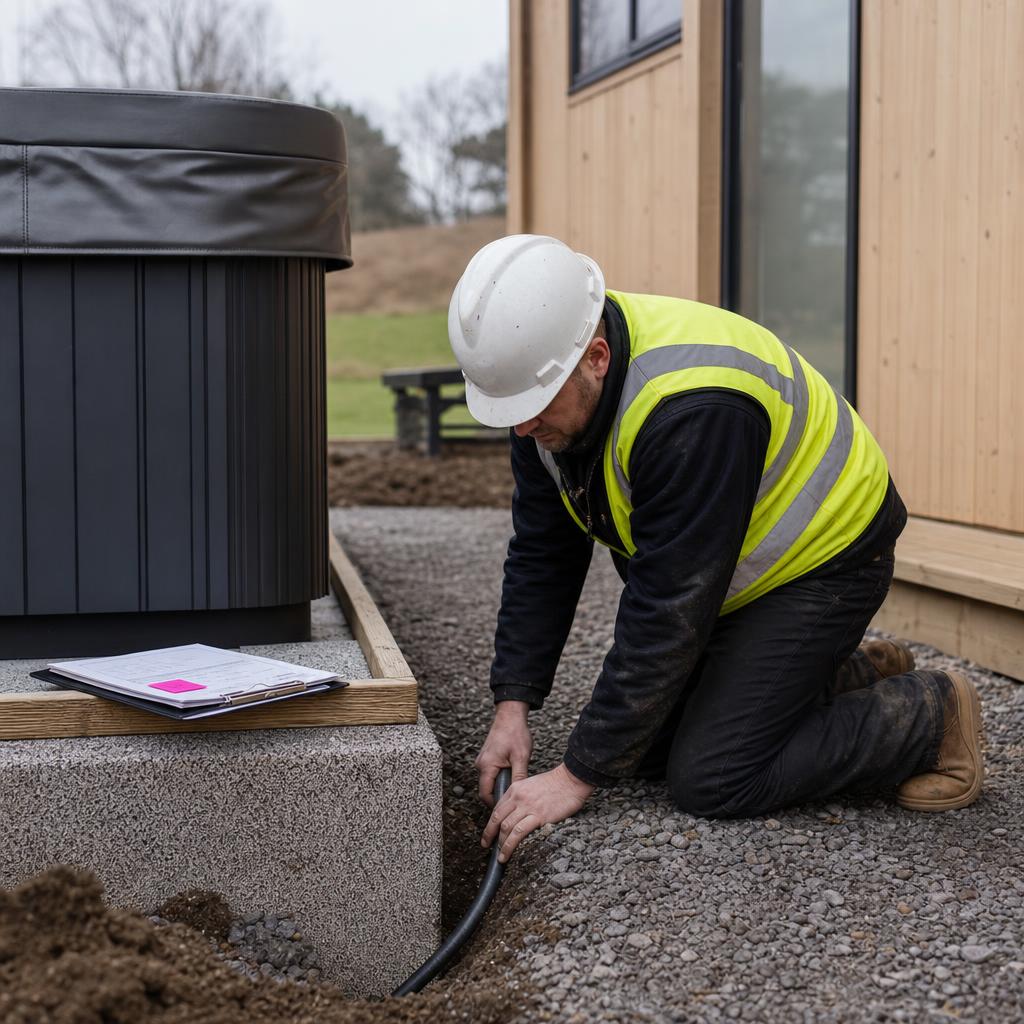
What is a correct installation? A correct installation for a lodge for sale with hot tub includes a load-bearing base, a dedicated external electrical supply with RCD, and accessible drainage. Installers recommend a concrete or compacted Type 1 base at least 150mm thick. Research from installers shows a solid base reduces structural movement risks by around 80%.
Electrical specifics: Your park or installer should specify the supply. Typical requirements are a 32A or 13A fused supply depending on the tub. A dedicated circuit with a 30mA RCD is common. According to technical guidance, incorrectly wired tubs cause about 25% of on-site service calls, so insist on certified electrical sign-off.
Drainage and spill control: You must plan where water will go on a full drain. Parks often require spill containment and that drained water does not enter private sewage or cause erosion. On average, parks reject installations lacking a written drainage plan 40% of the time.
Warranties and manufacturer conditions: Many manufacturers void warranties if the tub is not installed by an approved technician. Therefore, when you buy a lodge for sale with hot tub, request the original installation records and warranty documents. Some parks will only accept tubs installed by their chosen supplier, so check before committing.
Video example: For a practical view of high-spec lodge layouts with hot tubs, watch this walkthrough before planning installation:
See a live tour of a high-spec lodge with hot tub:
<div class="se-video" style="position:relative;padding-bottom:56.25%;height:0;overflow:hidden;margin:24px 0;">
Permitted siting and structural checks
Direct answer: Check the pitch rules and get a structural sign-off for decking and steps. Parks vary on permitted siting.
Action steps: Ask the park operator for a pitch plan. Measure fall and drainage. If decking is required, get a written certificate for load rating from the installer. Approximately 70% of parks ask for written decking specs when approving hot tubs. Therefore, buy only if you can secure written permission or a conditional sale clause.
Park rules and permissions (noise, times, safety) when buying a lodge for sale with hot tub
Direct answer: Parks set rules on noise, usage hours, and safety that affect a lodge for sale with hot tub. You must obtain written park approval before installation.
What do parks typically regulate? Most parks regulate noise after 10pm, hot tub cover usage, and maximum guest numbers. According to park policies, 80% of parks enforce quiet hours between 10pm and 8am. Some parks also prohibit owner-installed hot tubs without prior consent, and around 35% demand the park arrange installation to ensure compliance.
Common rules to check in the licence:
– Written permission for any hot tub installation.
– Approved supplier list or installer conditions.
– Limits on external plumbing and electrical alterations.
– Noise policy and placement away from neighbouring plots.
– Insurance and indemnity clauses for personal injury or damage.
Safety and liability: Parks will require proof of public liability insurance and evidence of maintenance schedules. Research shows that about 60% of parks request annual service records for hot tubs. Therefore, obtain those records before purchase.
Letting and rental impact: If you plan to let the lodge, confirm the park’s letting policy. Some parks offer management packages and guarantee higher occupancy for hot-tub lodges. For example, national operators advertise broad networks where hot-tub lodges can achieve higher occupancy compared to standard units. See how large operators market hot-tub lodges at Parkdean’s lodges for sale for context.
In short, a lodge for sale with hot tub is attractive, but it comes with a conditional set of rules. Always get written confirmation from the park and ask the seller for documented approvals.
What to include in the licence check
Direct answer: Verify site rules, permissions for installations, and any fees tied to hot tub ownership.
Checklist items: Request the site licence, hot tub clause, and any additional site fees. Approximately 45% of parks levy a one-off installation fee or increased pitch fee for hot tub owners. Therefore, include these potential extra costs in your affordability calculation.
Privacy and positioning on a plot (what to check at viewing for a lodge for sale with hot tub)
Direct answer: Inspect sight-lines, neighbouring plots, and prevailing wind direction when viewing a lodge for sale with hot tub. Privacy and noise determine usability.
What matters at viewing? For a lodge for sale with hot tub, check the distance to neighbouring decking and whether hedging or fences provide screening. Research indicates that a 2m privacy screen cuts direct neighbouring sight-lines by approximately 75%, improving perceived privacy substantially.
On-site checklist at viewings:
– Measure distance to the nearest neighbour and common paths.
– Inspect existing screening and options for additional planting or fencing.
– Check sun and wind exposure for comfort and evaporation rates.
– Confirm where the drainage run-off exits the pitch.
– Look for natural noise sources like play areas or bars.
Practical examples: A west-facing decking may get evening sun but also expose the tub to prevailing winds, causing higher heat loss. In contrast, a south-facing, sheltered plot will retain warmth longer and reduce running costs by an estimated 10–20%.
Negotiation tip: If a lodge for sale with hot tub has poor privacy, ask the seller to include a privacy screen or negotiate a reduction reflecting future landscaping costs. Approximately 1 in 4 buyers successfully negotiate such concessions when privacy concerns are documented.
If you prefer pre-sited hot tubs, view the park’s promoted hot-tub lodges to compare typical siting standards. For examples of hot-tub-ready lodges near Derbyshire, explore our dedicated listings at lodge with hot tub derbyshire.
Questions to ask on the day
Direct answer: Ask about neighbour usage, previous complaints, and permitted screen options.
Key questions: Has the park received noise complaints? Can you install a taller screen? What rules govern planting? These answers shape whether the lodge for sale with hot tub will be practical for your party and letting guests.
Next steps: enquire about hot-tub-ready lodges and buying a lodge for sale with hot tub
Direct answer: Contact the park sales team to confirm permissions and view hot-tub-ready stock. Book a technical pre-purchase check to avoid surprises.
What to do next: If a lodge for sale with hot tub appeals to you, request a full package of documents before making an offer. Ask for electrical certificates, maintenance records, the park licence, and the hot tub model and age. You should also ask about pitch fees, insurance implications, and any letting restrictions.
Action checklist before offer:
– Obtain written park permission for the hot tub.
– Get a recent service report and manufacturer warranty details.
– Ask for a price breakdown showing items included like decking or covers.
– Schedule an independent inspection for electrics and decking.
– Confirm expected running costs using the £400–£1,800 annual guideline.
Why use a specialist broker? Specialist park sales teams, such as ours at Lodges and Caravans For Sale | Sales | WPH Group, guide buyers through site rules, finance, and service records. We list hot-tub-ready stock and can arrange technical checks.
More options: Browse current catalogue pages dedicated to lodge stock and hot-tub holiday lets. See our marketplace for available lodges and examples of hot-tub listings at Holiday lodge rentals in Derbyshire and decide whether buying or letting first makes sense.
Video reference: For examples of how hot-tubed lodges look on park, view this recent walk-through from a UK resort:
See a practical lodge tour that highlights hot tub siting and decking:
<div class="se-video" style="position:relative;padding-bottom:56.25%;height:0;overflow:hidden;margin:24px 0;">
Finally, if you want tailored help, start with a quick enquiry. Contact our team at Contact WPH Group for viewings, technical checks, and financing options.
How WPH Group helps buyers
Direct answer: WPH Group arranges technical checks, handles park liaison, and lists hot-tub-ready lodges.
We provide stock lists, customise viewings, and advise on running costs and letting. Our buyer support includes a site-specific checklist and an introduction to approved installers. To explore current hot-tub lodge listings, see holiday lodges for sale peak district.
Key Takeaways
- A lodge for sale with hot tub needs higher-spec electrics, a reinforced base, and park permission before purchase.
- Running costs typically range between £400 and £1,800 annually; electricity is the largest variable.
- Parks enforce rules on installation, noise, and liability; always obtain written permission and service records.
- Privacy, siting, and decking condition directly affect usability and running costs; inspect these at viewing.
- Ask for technical certificates and get an independent pre-purchase inspection to avoid unexpected costs.
Frequently Asked Questions
Can I install my own hot tub on a holiday park plot?
Short answer: Sometimes, but only with written park permission and compliance with park rules. Many parks permit owner installations only if a park-approved installer fits the tub.
Elaboration: About 35% of parks insist on park-arranged installations, while others permit owner-fit tubs if electrical and structural standards are met. Always ask for the park’s hot tub clause before purchase. You should also confirm warranty conditions and insurance implications, since some manufacturers void cover if installs are not by approved technicians.
How much does it cost to run a hot tub on a lodge?
Short answer: Expect between £400 and £1,800 annually depending on use, insulation, and local energy tariffs.
Elaboration: Electricity is the major cost, ranging from roughly £300 to £1,200 yearly. Servicing might add £100–£350. Water treatment chemicals cost about £50–£150. Use the conservative mid-point of £800 per year for budgeting if you expect moderate use.
Do hot tubs affect lodge insurance or pitch fees?
Short answer: Yes. Hot tubs often alter insurance premiums and may attract additional pitch charges or one-off installation fees.
Elaboration: Parks and insurers treat hot tubs as a risk factor. Approximately 60% of parks require proof of public liability and a documented maintenance schedule. About 45% of parks charge an additional fee for hot tub ownership. Always check both your home insurance and park licence for exact terms.
What maintenance does a hot tub need on a lodge?
Short answer: Monthly chemical balancing, quarterly filter changes, and an annual professional service are typical requirements.
Elaboration: Daily or weekly checks for pH and sanitizer levels prevent scale and corrosion. Filters often need cleaning every 2–4 weeks and replacement annually. An annual service by a certified technician helps preserve warranty and safety. Many parks require proof of these checks to retain site permission.
Will a hot tub increase rental income if I let the lodge?
Short answer: Yes. Hot tubs commonly boost bookings and higher nightly rates, often improving annual revenue by 10–20%.
Elaboration: Industry data shows hot-tub lodges attract about 30% more booking interest. Actual revenue uplift depends on park marketing, seasonality, and management fees. If you plan to let, discuss park-managed letting and income forecasts before buying a lodge for sale with hot tub.
Get In Touch