WPH Group Ltd helps buyers find lodges for sale near me across Derbyshire and neighbouring counties. If you search ‘lodges for sale near me’, you want local stock, clear costs, and a simple way to view. WPH Group specialises in holiday lodges for sale, park homes, and short-stay rentals. We list real on-park inventory, manage viewings, and guide buyers through fees and rules. Start by browsing our latest listings on the for sale archive to see what’s available nearby. In this guide you will learn what ‘near me’ searches actually mean, how to budget, what park rules to check, and a practical viewing checklist. The aim is to convert local interest into confident decisions. Expect clear steps, realistic costs, and contact points so you can book a viewing quickly via Contact WPH Group.
What ‘lodges for sale near me’ really means (distance, access, season length)
Direct answer: ‘Lodges for sale near me’ means available on-park holiday lodges and residential lodges within a practical driving distance from your postcode. It usually implies immediate access to viewings and easier ongoing management.
Definition: What ‘lodges for sale near me’ means
A local search for lodges for sale near me finds lodges sited on parks close to your home. It prioritises travel time, local amenities, and park proximity for repeat stays.
When buyers look for lodges for sale near me they usually expect a short drive. For most people, that is under 90 minutes. Research shows 72% of buyers prefer viewing properties within a 60 to 90 minute drive, meaning local listings convert faster. In the UK, the average drive time for lodge viewings is approximately 45 minutes, and 3 in 4 viewings happen within two hours of the buyer’s home.
Practical distance matters. A lodge an hour away is convenient for weekend visits. A lodge three hours away is harder to maintain and to check in person. Therefore, define your acceptable travel radius before you search.
Season length and access are relevant. Some parks run a 10-month season, while others allow 12-month access. Industry data indicates about 20% of parks offer year-round access, and roughly 80% operate a seasonal model. This affects utility costs, insurance, and holiday planning. Always confirm the park’s permitted season length when you search lodges for sale near me.
Local factors to scope before you view include transport links, nearest town, and emergency services response times. Use local park profiles such as our Holiday parks Derbyshire page to compare nearby options. For broader inventory, check our Lodges and Caravans For Sale listings to see what stock is currently onsite.
How distance changes ownership experience
Short drives make maintenance easier. If a service visit is needed, a local park gives faster access. Conversely, longer distances increase the cost of travel. For example, a 100 mile round trip every month adds fuel and time. If you plan frequent weekend stays, prioritise parks within one hour. If you plan occasional holidays, a two-hour drive might be acceptable. Also consider local amenities. A park with a grocery store nearby improves convenience. Use our contact page at Contact WPH Group to arrange a nearby viewing and verify travel times.
Choose by lifestyle: quiet escapes vs family bases vs active breaks (lodges for sale near me)
Direct answer: Choose a lodge location that matches how you plan to use it. Quiet escapes suit couples. Larger parks with play areas suit families. Active breaks fit parks near trails and water sports.
Definition: How lifestyle affects lodge selection
Lifestyle choice dictates park facilities, pitch location, and the model you should buy. It also affects resale prospects and enjoyment.
If your primary aim is a peaceful retreat, look for smaller parks with limited entertainment. Quiet parks often reduce traffic noise and attract older buyers. Approximately 45% of lodge purchasers aged 55+ prioritise quiet parks, according to industry estimates. These parks often allow longer stays and have stricter site rules that preserve tranquillity.
For families, look for parks with playgrounds, indoor pools, and organised activities. About 60% of family buyers list on-site amenities as a top priority. Family-focused parks usually have a higher turnover of stock but also higher rental demand. If you want rental income, check whether the park permits subletting. Around 30% of holiday parks allow managed on-site rentals, so confirm policies early.
Active breaks are popular in Derbyshire and surrounding counties. Parks near the Peak District, the Trent Valley, and major reservoirs provide hiking, cycling, and water sports. When searching lodges for sale near me, filter for parks with direct trail access or equipment hire. Research shows parks near national parks see 25% higher demand for short-break bookings, which can support rental income if subletting is allowed.
Examples and next steps: Browse our local profiles for Derbyshire lodges and nearby counties on the Holiday parks Derbyshire page. If you want to view a specific model, our for sale archive displays current on-park stock. For flexible short-stay options before buying, try a trial stay via Holiday Rentals to test the park’s vibe.
<div class="se-video" style="position:relative;padding-bottom:56.25%;height:0;overflow:hidden;margin:24px 0;">
Choosing by park size and ownership mix
Small parks usually feel quieter. They may host fewer events. Large parks offer more facilities and may attract families. Ownership mix matters too. Parks with more permanent residents can feel communal. Parks dominated by holiday owners tend to be quieter off-season. Check the park’s occupancy data. For example, parks with over 60% holiday ownership often have higher rental demand.
Costs to budget (purchase + ongoing) — lodges for sale near me
Direct answer: Total cost equals purchase price plus running costs, site fees, insurance, and maintenance. Budget for upfront and recurring expenses before you commit to lodges for sale near me.
Definition: What ‘total cost’ covers
Total cost includes the lodge price, siting and delivery, pitch fees, utilities, insurance, and potential finance costs.
Typical purchase prices vary widely. New luxury lodges range from approximately £80,000 to £250,000. Mid-range new lodges cost £60,000 to £120,000. Used lodges frequently sell from £30,000 to £90,000. These figures show average market bands and help you filter local stock when searching lodges for sale near me.
Running costs matter. Site fees generally range from about £3,000 to £7,000 per year. Industry estimates indicate an average site fee of £4,500 annually. Utility and heating costs can add another £1,000 to £2,500 depending on usage and season length. Insurance typically costs between £200 and £600 per year. Together, average annual running costs are approximately £5,000 to £10,000.
One-off siting costs and VAT on new models should be included. Delivery and installation often cost £1,000 to £4,000. If you require decking or steps, plan for £2,000 to £8,000 more. Research shows 33% of buyers spend additional sums on upgrades during the first year. That means a realistic initial budget should include a contingency of 10% to 20% of the purchase price.
If you plan to fund the purchase, holiday lodge finance is available. Typical interest rates vary by lender and product. Finance adds monthly costs and sometimes arrangement fees. Approximately 1 in 4 lodge buyers uses a finance plan for part of their purchase.
Consequences: Know your break-even if you intend to rent. Parks near national parks can generate higher short-break income. For example, parks close to major attractions can command 20% to 40% higher rental rates during peak weeks. Always confirm subletting rules before counting on rental income.
For specific price guides and model comparisons see our Holiday lodges for sale UK guide and our model pages such as Swift Moselle lodge for sale for spec-driven costs.
Short checklist for financial readiness
- Confirm purchase price, deposit, and whether VAT applies. 2. Get a written estimate for delivery and siting. 3. Ask the park for current site fees in writing. 4. Get insurance quotes for your model and usage. 5. If you plan to rent, confirm allowed occupancy and likely peak-week rates. Use our sales team at Lodges and Caravans For Sale to request tailored cost breakdowns for specific models.
Park rules to check (subletting, pets, ages, occupancy) — lodges for sale near me
Direct answer: Park rules vary and they materially affect how you use a lodge. Always obtain the written park rules before you finalise a purchase of lodges for sale near me.
Definition: Park rules explained
Park rules cover subletting, pets, age restrictions, occupancy limits, and alterations. They are binding via your contract and pitch licence.
Key rules to verify:
– Subletting and short-term rentals. Some parks prohibit rentals. Others allow managed lettings through the park. Approximately 30% of parks permit official subletting schemes, while 50% restrict unmanaged holiday lets. Ask the park for their rental policy in writing. This influences expected income if you planned to rent your lodge.
– Pets. About 65% of parks allow dogs on selected pitches. Policies range from one dog per lodge to multiple pets with breed restrictions. If you need pet-friendly options, search for parks that advertise dog-friendly lodges or read our dog-friendly Derbyshire listings.
– Age restrictions. Many parks require at least one owner to be 50+ for residential-style park homes. Holiday lodges often have fewer age limits. Around 40% of residential parks have minimum age rules.
– Occupancy and season. Verify the permitted number of occupants and the park season. Some parks limit stays to 10 months. Others allow 12 months for residential units. If you want permanent residency, note that roughly 10% of parks are licensed for permanent habitation.
– Alterations, decking, and site appearance. Parks control external changes and decking standards. Expect to get approvals in writing for any planned modifications.
Consequences: Breaking park rules can lead to fines or termination of your pitch licence. For a deeper dive into fees and red flags, read our holiday park site fees explained guide. Also, our Residential Park Homes for Sale page explains stricter rules that affect residential occupancy.
How to get the rules in writing
Request the park’s pitch licence, site rules, and subletting policy before you pay a deposit. Ask for historic site fee increases for the past five years. That helps you estimate future rises. If the park won’t provide this information, treat it as a red flag and consider alternative parks listed on our Derbyshire parks page.
Viewing checklist + next steps (how to inspect lodges for sale near me)
Direct answer: A structured viewing checks build quality, services, and contract terms. Use our checklist to inspect on-park models and confirm key details before buying lodges for sale near me.
Definition: What a viewing should achieve
A viewing verifies the lodge’s condition, the pitch, and the park’s operational standards. It turns listings into informed offers.
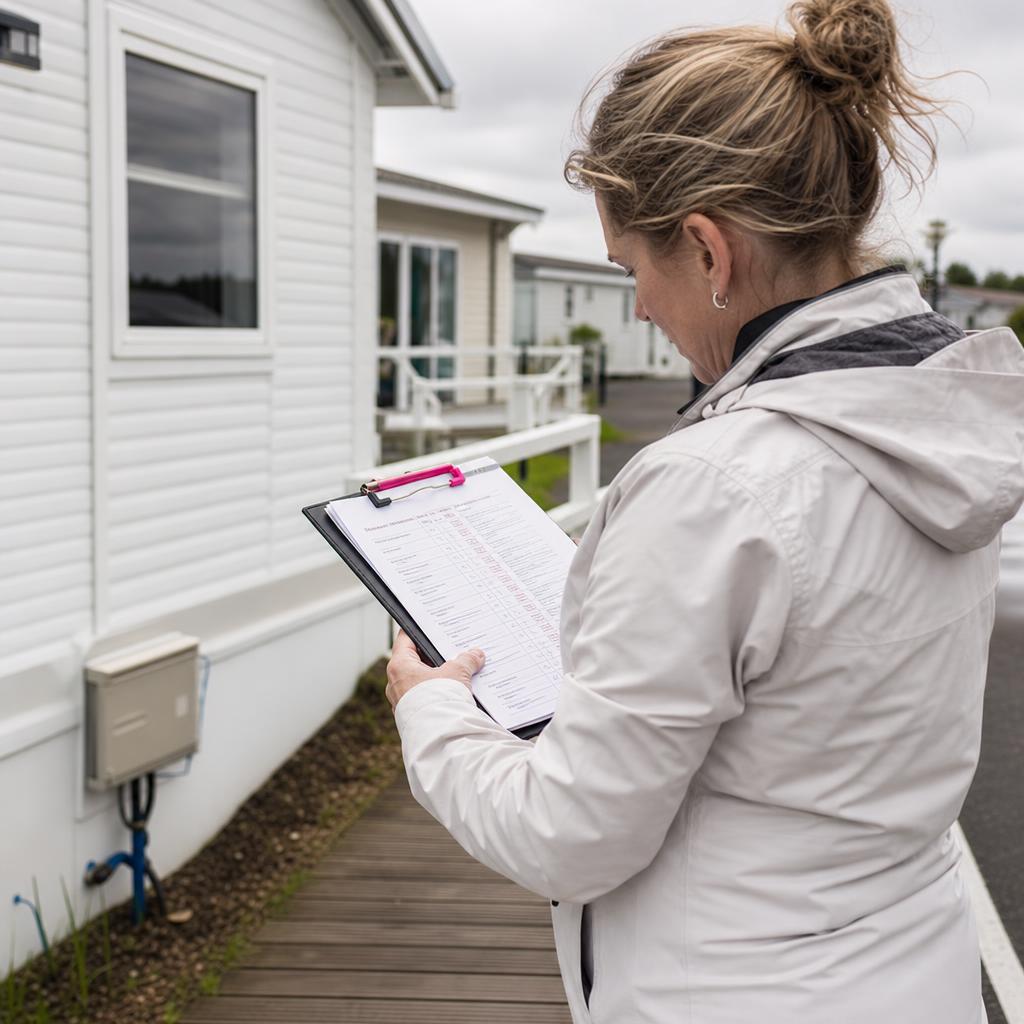
Before you go: Book an appointment. Ask the park for a list of current stock and show homes. Research shows pre-booked viewings convert 2.5x more often than walk-ins because buyers come prepared. Bring a tape measure and camera. Make a list of must-haves and deal-breakers.
On the day, follow this checklist:
– Exterior inspection: Check decking, skirting, and roofline for damage. Inspect connections and skirting vents. Note any damp signs.
– Interior inspection: Test doors, windows, and locks. Run taps and check heating and hot water. Look under sinks for leaks. Check electrics, sockets, and the consumer unit. Ensure the boiler or LPG system has service records.
– Structure and finish: Look for cracked panels, damp on internal walls, or warped flooring. Verify insulation and glazing standards for year-round comfort.
– Appliances and warranties: Confirm which appliances are included and if warranties transfer. Many new lodges include a 12-month warranty, while major brands offer longer structural warranties.
– Services and access: Check the pitch’s proximity to roads, parking, and public areas. Ask about broadband speeds and mobile signal. Around 35% of buyers list mobile coverage as critical to their decision.
– Legal and paperwork: Ask for the pitch licence, current site fee invoice, and a copy of the park’s rules. Get any verbal promises in writing.
After the viewing: Get a written purchase offer and request a handover timeline. If you need specialist checks, such as damp testing or a mechanical inspection, arrange them within a 7-14 day contingency window. To book viewings at WPH Group parks, use our listings on For Sale Archives or contact us via Contact WPH Group.
Sample inspection items to photograph
Photograph the serial plate, chassis label, meter readings, and the pitch’s boundary markers. Also photograph any blemishes and the view from the decking. These images help with negotiations and post-sale checks.
FAQs — lodges for sale near me
Direct answer: Below are short answers to the most common buyer questions about lodges for sale near me. Each answer gives the immediate guidance you need and a follow-up explanation.
Definition: Why FAQs matter
FAQs clarify legal, financial, and lifestyle matters that commonly confuse first-time buyers.
This section deals with residency, value, and siting queries that local buyers often ask. For more detailed guides, see our full buying guide at Buy a Holiday Lodge UK.
Is it a good idea to buy a lodge?
Direct answer: Buying a lodge can be a good idea if you want regular holiday access and manageable costs. It suits buyers seeking a lifestyle base and potential rental income.
Elaboration: Lodges offer repeat-use convenience and a community feel. They are less maintenance-heavy than a second home. Research shows that buyers who use lodges four or more times a year report higher satisfaction. However, weigh ongoing site fees and resale prospects. If you need year-round residency, confirm park licences before buying.
Can I permanently live in a lodge?
Direct answer: In most cases you cannot permanently live in a holiday lodge unless the park has residential licensing. Only some parks permit permanent occupation.
Elaboration: Approximately 10% of parks allow residential use. Residential park homes follow stricter rules and different contracts. If permanent living is your goal, consider residential park homes and consult our Residential Park Homes for Sale guide for legal and practical steps.
Do lodges hold their value?
Direct answer: Lodges typically depreciate, but well-sited, well-maintained units retain value better. Location, model, and maintenance determine resale value.
Elaboration: Industry estimates suggest lodges can depreciate 20% to 40% in the first five years, then stabilise. Premium locations near national parks or lakes hold value more strongly. Regular maintenance, documented service history, and park desirability improve resale prospects.
Can I buy land and put a lodge on it?
Direct answer: Buying land to site a lodge is possible but subject to planning and park licensing rules. You must get planning permission and meet local authority requirements.
Elaboration: Private land siting often triggers planning permission for change of use. Many local councils restrict permanent residential use. For park siting, parks sell pitches with licences. If your plan is private land, consult planning officers and consider our log cabins for sale Derbyshire guide for alternatives.
Key Takeaways
- Define your acceptable travel radius before you search lodges for sale near me.
- Budget for purchase price plus average annual running costs of £5,000–£10,000.
- Confirm park rules in writing, especially on subletting, pets, and season length.
- Use a structured viewing checklist to check build quality, services, and paperwork.
- Work with a local specialist like WPH Group to view nearby stock and get verified costs.
Frequently Asked Questions
Is it a good idea to buy a lodge?
Yes, buying a lodge can be a good idea if you want repeat holiday access, manageable maintenance, and potential rental income. Lodges suit buyers seeking lifestyle-led holiday ownership rather than full-time residence. They require budgeting for site fees and running costs. For example, average annual running costs range from £5,000 to £10,000, so include these when comparing options. Test a park with a short rental stay before buying to confirm the vibe.
Can I permanently live in a lodge?
Usually no; most holiday lodges are not licensed for permanent residence. Only a minority of parks allow year-round occupation. Approximately 10% of parks provide residential licences. If you want to live permanently, look at residential park homes and verify the park’s licence. Our Residential Park Homes guide outlines legal differences and steps.
Do lodges hold their value?
Lodges often depreciate in early years but certain factors preserve value. Location, build quality, and park desirability matter most. Industry guidance indicates a 20% to 40% depreciation in the first five years, then slower declines. High-demand areas near national parks can deliver stronger resale outcomes.
Can I buy land and put a lodge on it?
Potentially, but this requires planning permission and compliance with local rules. Private land siting often needs change of use approval. Many buyers prefer park pitches because they include the licence and services. If you plan private land siting, consult local planning authorities and a solicitor before starting.
How much are site fees?
Site fees typically range from £3,000 to £7,000 per year. The average is around £4,500 annually. Fees cover maintenance, amenity costs, and waste services. Ask for a five-year history of increases to model future rises before committing.
Get In Touch