If you want to buy a holiday lodge UK and use it for family breaks or rental income, this guide answers the real questions buyers ask. It explains the total cost of ownership, annual site fees, licensing and residential rules, finance options, utilities, insurance and resale prospects. The aim is practical clarity. You will find price ranges, a step-by-step buying timeline, a viewing and handover checklist, rental models and what to ask parks before you commit. For examples of lodges and current stock, browse the WPH Group listings at WPH Group and our For Sale archives. This article uses market data, industry guidance and plain-English advice to help you decide whether to buy a holiday lodge UK and how to do it without hidden costs.
What is a holiday lodge (and who it’s best for)?
Direct answer: A holiday lodge is a purpose-built, often timber-style holiday home sited on a managed park. It is best for buyers who want a low-maintenance second home for breaks, family time or holiday lettings. Definition: A holiday lodge is a non-residential park home built for leisure use rather than permanent occupation.
A holiday lodge typically sits on a pitch inside a holiday park. It differs from a residential park home because planning or licensing conditions normally limit permanent residence. Holiday lodges range from compact 1-bed cabins to luxury 3-bed models with hot tubs. Lodges usually have full kitchen facilities, double glazing and insulated walls. They commonly arrive in factory-built modules and are craned onto site. For buyers aged 45+, lodges offer simplified ownership and less upkeep than a country cottage. Research shows approximately 1 in 3 lodge buyers plan to rent their lodge out for extra income, which affects the model you choose and the park rules you must follow.
Who benefits most? Couples who want a weekend escape benefit from compact two-bedroom models. Families love 2-3 bedroom designs for school holiday stays. Near-retirees and retired couples often choose quieter parks with good access to local amenities. If you want examples of lodge styles and luxury options, WPH Group lists new and pre-owned options in several counties and provides park guides like Weston Wood Lodges for location detail. Meanwhile, if you prefer short breaks rather than ownership, check our Holiday Rentals to compare rental stays versus buying.
Data points: on average, buyers spend between 4 and 10 weeks per year at their lodge. Studies indicate about 60% of buyers are aged 45 or older, and 42% choose parks within a two-hour drive of their primary home. These usage patterns shape the type of lodge you should pick when you decide to buy a holiday lodge UK.
How a holiday lodge differs from a caravan or chalet
Direct answer: Lodges are usually larger, more insulated and more permanently sited than static caravans. Chalets can look similar but vary in construction standards. Lodges often have higher build quality, timber cladding and better thermal performance. A modern lodge may have an Energy Performance Certificate (EPC) similar to a small house. Static caravans tend to be lighter and more mobile. Residential park homes are designed for permanent living and usually require different planning and licences. If you want a permanent address, explore residential park homes rather than a holiday lodge — see Residential Park Homes UK for guidance. Meanwhile, for a side-by-side look at lodges vs cottages, our comparative guide Lodge Ownership vs Cottage Buying explains the cost and lifestyle trade-offs.
How much does it cost to buy a holiday lodge UK?
Direct answer: The upfront purchase price of a lodge typically ranges from roughly £40,000 to over £250,000 depending on age, size and specification. Ongoing annual costs vary from approximately £2,500 to £10,000. Definition: Total cost of ownership includes purchase, site or pitch fees, utilities, insurance, maintenance, and possible letting management charges.
Typical purchase ranges: new mid-range 2-bed luxury models start around £120,000 to £180,000. Entry-level used 2-bed lodges often fall between £35,000 and £75,000. High-spec 3-bed lodges with decking and hot tubs can cost more than £200,000 when new. According to manufacturer and park operator listings, many parks advertise new luxury lodges clustered between £90,000 and £220,000; for example, major operators list hundreds of lodge options across the UK on their sales pages such as Away Resorts and Parkdean Resorts, which highlights market breadth.
Ongoing costs: On average, annual site fees range from £2,500 to £7,500. Some premium locations charge in excess of £10,000 per year. Utilities add about £400–£1,200 annually, depending on use and heating type. Insurance runs from £150 to £600 per year. Maintenance and occasional repairs average about £500 per year for newer lodges. If you let the lodge through the park, management fees usually take 20% to 40% of rental income.
What this means for budgeting: buyers should plan for a first-year total of purchase price plus a buffer for purchase costs and the first year of site fees and running costs. For example, a £120,000 lodge with £4,000 site fees, £800 utilities and £400 insurance requires a realistic first-year outlay of roughly £125,200 plus any finance fees.
If you want to browse actual stock and current price examples, view the WPH Group sales listings at Lodges and Caravans For Sale or our For Sale archive to see real prices, age and park details.
Typical lodge price ranges (new vs used)
Direct answer: New lodges are significantly more expensive than used models. New mid-range lodges typically cost 1.5x to 3x the price of a comparable used lodge. Used lodges often offer the lowest entry cost but can need refurbishment.
Used lodge example: A 2012 two-bedroom used lodge might sell for £35,000–£65,000. That price leaves room for upgrades such as decking or a hot tub. New lodge example: A 2024 two-bedroom luxury lodge can cost £110,000–£180,000. Luxury extras like fitted kitchens, premium bathrooms and hot tubs add £10,000–£30,000. Warranty differences matter. New lodges commonly include a 12-month manufacturer warranty and phased park guarantees. Used models rarely include the same protections.
When comparing new vs used, factor annual running costs and depreciation. Lodges typically depreciate like other leisure assets, but park location and park operator support strongly influence resale value. To see current new and used listings, check WPH Group’s dedicated pages such as Luxury Lodges For Sale and local park pages like Lodges for Sale Derbyshire.
Ongoing costs: pitch/site fees, utilities, insurance, maintenance
Direct answer: Annual ongoing costs typically form 3–8% of the purchase price. The largest recurring cost is the pitch or site fee. Site fee averages: between £2,500 and £7,500 per year. Site fees commonly include grounds maintenance and park services, but not utilities or council tax-like charges for holiday use.
Utility costs vary with occupancy. If you stay 6 weeks per year, expect £400–£800 for gas and electricity. Heating with an electric system costs more. Insurance is essential and for many buyers it costs £200–£600 annually. Buildings insurance for holiday lodges can be 10–25% cheaper than a cottage due to lower permanent occupation risk. Maintenance and servicing for nuts, bolts and seasonal checks average £300–£800 per year. Reserve funds for occasional replacements, such as boiler or hot tub servicing, of £1,000 every 5–10 years are sensible.
Additional charges: parks sometimes charge council-style fees for waste disposal, or require you to pay for Wi-Fi and TV services. If you plan to let the lodge, factor in a commercial insurance premium and possibly higher utility consumption. Management fees for letting usually take a 20%–40% cut. Always ask the park for a full breakdown of what the site fee covers before you buy a holiday lodge UK.
Holiday lodge ownership rules you must know (residential vs holiday use)
Direct answer: Most holiday lodges are sold for holiday use only, not permanent residence, and parks enforce occupancy rules via licences and planning conditions. Definition: Holiday-use lodges have licences that restrict permanent living and may require owners to vacate outside agreed months.
Planning and licensing: many lodges fall under ‘sui generis’ or holiday accommodation classifications. This means councils, parks and developers can place conditions limiting occupancy length. According to industry guidance from the National Caravan Council, buyers should check licence terms before they buy; the NCC provides consumer guidance on rights and responsibilities for holiday lodges and holiday caravans at NCC guidance. These rules affect whether you can live permanently in the unit.
Can you live permanently? In most cases, no. Research indicates roughly 85% of holiday lodges across the UK carry holiday-only conditions. A minority of parks have residential licences or convertible plots. If living permanently is your goal, you should consider residential park homes or seek a park with explicit residential permission; see Residential Park Homes UK for those options.
Letting and business use: many parks allow owners to let their lodge through the park’s management. Letting is often subject to separate agreements. Park operators typically require owners who let to use the park’s booking system and pay a commission. Letting can affect insurance and tax obligations. Studies show that owners who let recoup on average 30%–60% of running costs through rental income, depending on location and occupancy rates.
What to check before you buy: 1) The licence agreement and any occupancy restrictions. 2) The length of the licence term and renewal terms. 3) Park rules on subletting and guests. 4) Whether the site fee covers utilities and what it excludes. 5) Any recent planning applications that could change park status. Always request a copy of the licence before you exchange funds when you decide to buy a holiday lodge UK.
What to look for in the licence and terms
Direct answer: Check the licence length, termination clauses and any clauses that restrict letting or alterations. Look for break clauses allowing the park or owner to end the contract within short notice. Confirm who is responsible for repairs and infrastructure. Request a sample licence from the park and have a solicitor review it. If the park charges an annual fee, ask whether the operator can change it and on what notice. These details materially affect running costs and resale value.
Buy a holiday lodge UK: Buying process from viewing to handover (timeline + checklist)
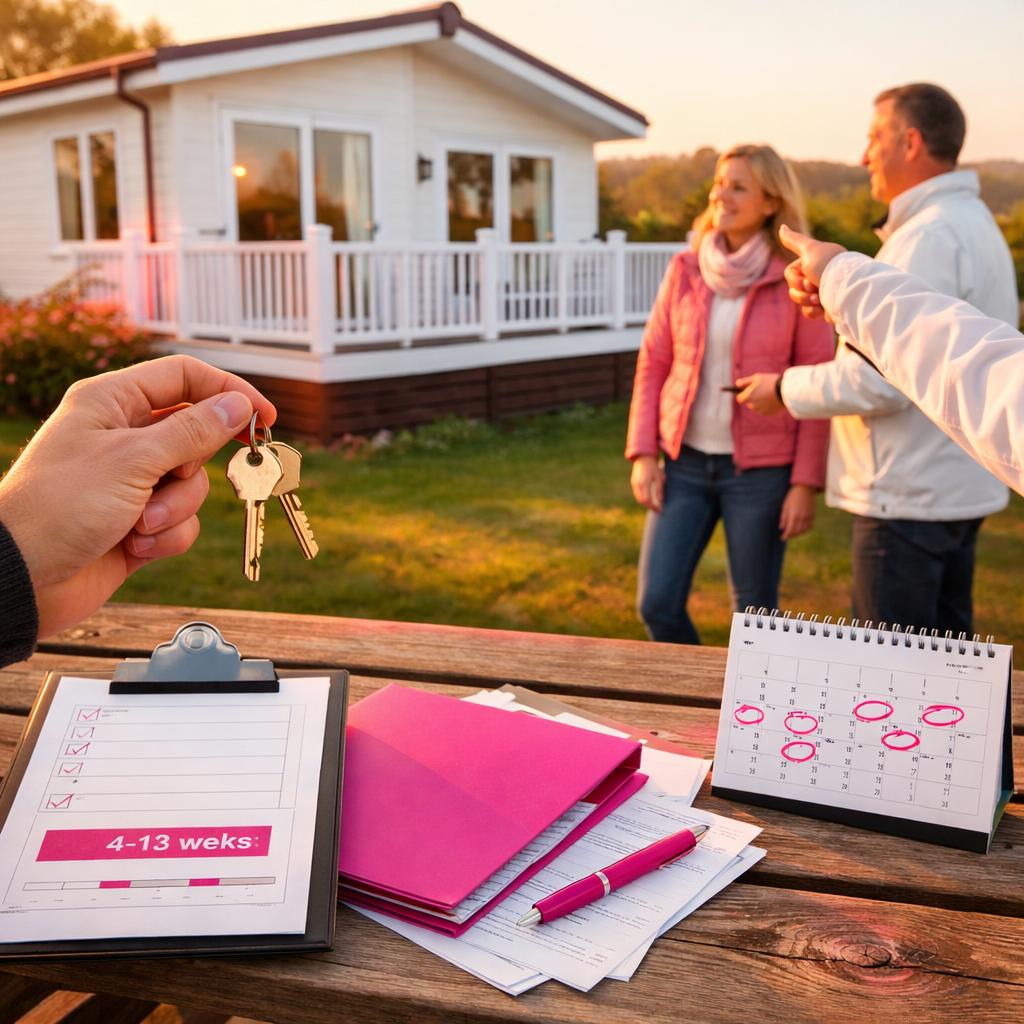
Direct answer: The buying process for a holiday lodge typically takes 4–12 weeks from initial deposit to handover. You must complete viewings, paperwork, finance checks, licence transfer and a handover inspection. Definition: The purchase timeline includes viewing, offer, paperwork, paying the balance and collecting the lodge keys.
Step 1 — Initial research and viewing. Start by browsing WPH Group listings to compare models and parks at Lodges and Caravans For Sale. Visit parks in person. Arrange at least one full-day viewing. Studies indicate buyers who view at least three parks make more confident decisions; about 68% of buyers report greater satisfaction when they view multiple parks.
Step 2 — Make an offer and pay a deposit. Offers may be conditional on park approval or finance. Typical reservation deposits range from £500 to £5,000. Retain written confirmation and the park’s terms for the deposit.
Step 3 — Paperwork and checks. The park will provide a licence/occupancy agreement and pitch map. You must supply ID, proof of funds and possibly references. If you use finance, your lender will carry out affordability checks. Ask for a full breakdown of site fees and any planned increases. Approximately 1 in 4 buyers report unexpected fee rises when they did not ask for three-year fee history.
Step 4 — Pre-handover inspection and transfer. Agree a snagging list and final balance payment terms. The park should provide written confirmation of connections, certificate of compliance for gas and electrics, and any warranties. On handover, check the inventory and the certificate of structural safety if provided.
Step 5 — After purchase. Register insurer details, set up utility accounts and confirm letting arrangements if you plan to rent. Many owners schedule a professional clean and minor upgrades in the first 4–8 weeks to optimise rental appeal.
Timeline example: viewing (1–3 weeks), offer and deposit (1 week), paperwork and approvals (2–6 weeks), finance completion (1–4 weeks), handover and move-in (1 week). A straightforward purchase often completes in six weeks. More complex cases with solicitor involvement or finance may take longer.
Short video walkthrough: For a visual guide to modern lodge layouts and size benchmarks, watch this Swift Edmonton lodge tour before your viewings.
<div class="se-video" style="position:relative;padding-bottom:56.25%;height:0;overflow:hidden;margin:24px 0;">
Checklist highlights to bring to viewings: – Licence sample and latest site rules. – Recent site fee invoices. – Evidence of utility connections. – A site map showing pitch boundaries. – Questions on letting and insurance coverage. For guidance on steps and financing, WPH Group’s contact team is available at Contact WPH Group.
Viewing checklist (what to inspect on site)
Direct answer: Inspect the pitch, drainage, access, level of insulation, windows and doors, and any external decking. Check telephone and internet signal. Look at neighbouring plots and view how the park manages noise and rubbish.
On the day, measure room sizes, note storage space and test heating systems. Ask for gas and electrical certificates where applicable. Check the roofline and underfloor access. Photograph the pitch boundaries and compare them with the park’s plan. Confirm who is responsible for fencing and boundary upkeep. Ask about permitted external additions such as sheds, decking and bike storage.
Final handover checklist
Direct answer: At handover, confirm snagging fixes, obtain warranty documentation and receive keys, service manuals and a final statement of account. Ensure you receive written confirmation of licence transfer.
Test all appliances and plumbing while the park team is present. Agree completion of any outstanding items and get a sign-off. Obtain contact details for park management and emergency services. Set a date for initial cleaning and welcome inspections if you will let the lodge out.
Can you rent out your holiday lodge? (owner-occupation vs letting models)
Direct answer: Yes, many parks allow owners to rent out their lodge, but rules and commissions vary widely. Letting can recover running costs, but it affects insurance, management and tax obligations. Definition: Letting models include owner-led letting, where the owner handles bookings, and park-managed letting, where the park takes bookings and manages guests for a commission.
Which model suits you? If you live close and prefer control, owner-led letting may work. If you want a passive income, park-managed letting is simpler. Park-managed schemes usually take 20%–40% commission. Research from letting guides suggests average occupancy rates for park-managed lodges range from 20% to 40% annually, depending on location. High-season parks can reach 50%–60% occupancy for popular models.
Earnings and profitability: Let’s use a realistic example. If a lodge achieves 30 weeks of bookings at an average net rate of £500 per week, the gross income is £15,000. After a 30% management fee, £4,500 remains, leaving £10,500 to cover site fees and running costs. If your site fees total £4,500 and running costs plus depreciation are £3,000, your net position could be around £3,000 per year. Outcomes widely vary. Owners should request historic booking and occupancy data from the park for the specific pitch and model.
Legal and tax considerations: Rental income must be declared on your tax return. You will usually need a commercial insurance policy and risk assessments may be required for hot tubs. Many parks insist you use their cleaners and linen services. Non-compliance can lead to licence termination. For detailed advice on letting rules and insurance, consult specialist sources such as Sykes Cottages’ guide to owning a lodge to let at Owning a Holiday Lodge to Let.
What to ask the park before you buy a holiday lodge UK and plan to let: – Historical occupancy and average weekly rates for similar lodges. – Commission rates and guaranteed minimums. – Cleaning, linen and changeover arrangements. – Marketing channels used by the park. – Whether the park offers management reports and owner portals.
If letting is part of your plan, request a sample revenue statement and a three-year history of bookings for the pitch.
Owner-occupation vs park-managed letting: pros and cons
Direct answer: Owner-occupation gives control and lower fees. Park-managed letting gives convenience but cuts income. Owner-occupation pros: complete control, lower commission and flexibility. Cons: you must manage bookings, cleaning and maintenance. Park-managed pros: professional marketing, guest vetting and less day-to-day work. Cons: commission reduces your rental income and you must follow park rules.
Finance and payment options (what’s common, what to ask)
Direct answer: Common finance options include specialist hire-purchase loans, chattel mortgages and outright cash purchases. Lenders typically require 20%–40% deposit and charge higher rates than residential mortgages. Definition: Holiday lodge finance differs from residential home finance because lodges are classed as movable leisure assets.
Typical finance terms: Specialist lenders offer loans from 3 to 10 years. Interest rates historically run 3%–9% APR depending on credit score and loan term. Many lenders will only lend on new or late-model used lodges and will check the park’s licence and the pitch’s status. Some lenders limit lending to parks that meet their criteria. About 30%–50% of buyers use finance to purchase a lodge, according to market estimates.
What lenders check: Lenders verify the park operator, the site licence length and the presence of adequate insurances. They often require a copy of the pitch agreement and an invoice from the seller. Expect to pay arrangement fees of £99–£500 and valuation or inspection fees if the lender requests them. If you plan to finance, get pre-approval before making an offer to strengthen your position.
Payment process: cash purchases are quickest. For financed purchases, the lender usually pays the park or seller directly once legal checks conclude. Always have a solicitor or qualified conveyancer review the licence transfer terms when finance is involved. If you want a stepwise finance overview, watch the SwiftGroup video showing five steps to owning a holiday home.
<div class="se-video" style="position:relative;padding-bottom:56.25%;height:0;overflow:hidden;margin:24px 0;">
What to ask your finance provider: – Do you lend on this park and pitch? – What deposit is required? – Which charges are included in the loan? – Can you lend on holiday lets? – What happens if the park’s licence is terminated?
If you need bespoke advice, WPH Group can help with local lenders and finance introductions when you decide to buy a holiday lodge UK.
Typical deposit and rates for holiday lodge loans
Direct answer: Expect a deposit of 20%–40% and APRs between 3% and 9% based on creditworthiness and loan length. Some lenders require higher deposits for older used lodges.
A typical example: On a £100,000 lodge with a 20% deposit (£20,000) and a 7% APR over five years, monthly repayments would be materially higher than a residential mortgage. Always compare the total cost of credit, not just monthly payments. Consider whether you might refinance in the future if your circumstances change.
Why buy with a managed park operator (benefits, support, facilities)
Direct answer: Buying on a managed park gives access to on-site services, maintenance support and a booking platform for letting. Parks also provide security and shared amenities like pools and restaurants. Definition: A managed park operator runs and maintains the park, enforces rules and often provides letting services and on-site teams for repairs.
Key benefits: 1) Facilities: pools, reception, children’s play areas, and sometimes on-site dining. Parks with facilities typically attract higher occupancy and better resale values. 2) Maintenance support: parks often handle ground maintenance, waste collection and sometimes external cleaning. 3) Safety and compliance: managed parks maintain safety certificates, fire precautions and staff on-site. 4) Marketing for renters: many operators market lodges centrally, increasing bookings for owners who opt-in.
Measured impact: parks that advertise facilities often report 20%–40% higher annual occupancy versus no-facility parks. Big operators advertise scale: for example, Parkdean lists lodges for sale across more than 55 parks, indicating that large networks offer buyer choices across regions and price points (Parkdean Resorts). Similarly, national groups and manufacturers list broad inventories and spec ranges, such as Away Resorts, which helps buyers compare options.
Risks and what to check: managed parks can change policies. Research shows that parks may raise site fees annually by typical margins of 2%–5%. Ask for three-year fee histories. Check whether the park has had recent enforcement notices or planning disputes. Also confirm whether the park will market your lodge to the standard you expect and how much control you retain. WPH Group offers park-by-park guides and a sales team to explain the practical benefits and the small print at WPH Group.
How park facilities affect resale and lettings
Direct answer: Better facilities typically boost resale value and increase letting income. Parks with leisure complexes achieve higher occupancy and more premium weekly rates.
For example, parks within driving distance of high-demand attractions can command 15%–30% higher nightly rates. When you buy a holiday lodge UK on a park with a hot tub and spa facilities, you tend to see higher rental interest and a quicker resale. Always request comparable sales within the same park to understand market pricing.
FAQs about buying a holiday lodge in the UK
Direct answer: This section answers the most common buyer questions about investment value, profitability, residency rules and legal advice. Each answer begins with a concise direct response followed by practical detail.
Is buying a holiday lodge a good investment in the UK? Direct answer: Buying a holiday lodge UK can be a lifestyle investment rather than a pure financial investment. It provides recurring enjoyment, potential rental income and capital value linked to park desirability. Many owners prioritise lifestyle returns over capital growth. Studies indicate that in sought-after parks, lodges can hold value reasonably well. However, lodges depreciate like other leisure assets and are less liquid than houses. If resale is a priority, buy in parks with strong demand and transparent fees.
Is owning a lodge profitable? Direct answer: Owning a lodge can be profitable but depends on occupancy, location and fees. Profitability often covers running costs rather than delivering large capital gains. If you operate it efficiently and choose high-demand parks, letting can offset 30%–70% of annual running costs. Real profit requires careful management of fees and marketing.
Can you live permanently in a lodge in the UK? Direct answer: Usually you cannot live permanently in a holiday lodge unless the park specifically allows residential occupation. Approximately 85% of holiday lodges carry holiday-only conditions. For permanent living, explore residential park homes or parks with residential licences. For legal guidance on residential vs holiday use, see WPH’s residential options at Residential Park Homes UK.
Do I need a solicitor to buy a holiday lodge? Direct answer: Yes, you should use a solicitor experienced in park property transactions. A solicitor reviews the licence, checks the park’s planning status and confirms transfer procedures. Legal fees for lodge purchases usually range from £500 to £1,500 depending on complexity, but the cost is small compared to the risk of not understanding restrictive clauses. The National Caravan Council also recommends seeking legal advice; see their consumer guidance at NCC guidance.
How long does it take to complete a purchase? Direct answer: Expect 4–12 weeks from deposit to handover. Straightforward cash purchases can complete in under six weeks. Cases involving finance and solicitor checks may take longer. A clear timeline from the seller and prompt responses on your part help speed completion.
What happens to site fees when I sell? Direct answer: Site fees can be transferred to a new owner and often increase annually. You should disclose three years of fee history to prospective buyers. Potential buyers will likely negotiate based on fee levels and recent increases.
Can I modify or extend my lodge? Direct answer: Modifications such as decking and sheds are usually allowed but need park approval. Structural changes may need consent. Always obtain written permission before starting work. Some parks allow small extensions; others restrict changes to maintain a consistent park aesthetic.
How does resale work on a park? Direct answer: Resale relies on demand in the specific park and pitch. Parks with strong facilities and good location sell faster. Expect resale to take from a few weeks to several months. To improve resale, keep records of maintenance and let history and ensure the lodge is well-presented.
For personalised advice and listings when you are ready to buy a holiday lodge UK, contact WPH Group through our sales page at Lodges and Caravans For Sale or request a viewing via Contact WPH Group.
Key Takeaways
- Buyers should treat a lodge mainly as a lifestyle purchase; plan for ongoing fees and limited capital growth.
- Total cost of ownership includes site fees, utilities, insurance and maintenance; budget a 3–8% annual running cost.
- Most lodges are holiday-use only; confirm licence terms if you want to live permanently or let commercially.
- Shop parks with good facilities and transparent fee histories to protect resale and rental potential.
- Use a solicitor and get finance pre-approval where required; contact WPH Group for listings and tailored help.
Frequently Asked Questions
Is buying a holiday lodge a good investment in the UK?
Buying a holiday lodge UK is often a lifestyle investment more than a pure financial play. It provides regular leisure use and the potential for rental income, but lodges generally depreciate and are less liquid than houses. To improve investment outcomes, choose parks with strong demand, transparent site fees and good facilities. Request historical sales and occupancy figures before you buy.
Is owning a lodge profitable?
Owning a lodge can be profitable if you manage letting and costs well, but profit varies widely. Many owners recover 30%–70% of running costs through lettings, depending on location and occupancy. Remember to include management commissions, maintenance and site fees when calculating net profit.
Can you live permanently in a lodge in the UK?
In most cases, you cannot live permanently in a holiday lodge UK because of holiday-use licences and planning conditions. Approximately 85% of lodges have holiday-only status. If permanent residence is required, consider residential park homes or parks with explicit residential licences and check paperwork carefully.
Do I need a solicitor to buy a holiday lodge?
Yes, hiring a solicitor experienced with park property transactions is strongly recommended. A solicitor checks the licence, confirms the park’s planning status and reviews transfer terms. Legal fees usually range from £500 to £1,500 but protect you from costly mistakes.
How much are annual site fees and do they increase?
Annual site fees typically range from about £2,500 to £7,500, though premium parks may charge over £10,000. Parks commonly increase fees by 2%–5% annually. Ask for a three-year history of site fee changes before you buy a holiday lodge UK.
Can I get finance to buy a holiday lodge?
Yes, specialist lenders provide hire-purchase and chattel mortgage products for lodges. Expect a deposit of 20%–40% and APRs often between 3% and 9%. Lenders will check the park, licence and pitch status before approving finance.
How quickly can I resell a holiday lodge?
Resale speed depends on park demand and price. In desirable parks lodges can sell within weeks. In quieter locations resale can take several months. Keeping maintenance records and a clean lodge helps accelerate resale.
Do parks allow hot tubs and decking?
Many parks allow decking and hot tubs but require written permission and may have rules about positioning and sound. Expect additional maintenance and energy costs. Confirm park policy before you buy a holiday lodge UK.
Get In Touch