If you’re researching a holiday park derbyshire for short breaks, lodge ownership, or a second-home lifestyle, this WPH Group directory is designed to save you time. It front-loads the facts most buyers and holidaymakers ask for: park type, family or couples fit, pet policies, average site fees, transport links, and nearby Peak District attractions. This page acts as the central hub for 15 individual park pages we’ll publish next, and it already links to our core buyer resources and sales pages to help you plan viewings or get a quote. For example, see our main listings at Holiday Homes in Derbyshire | Buy A Holiday Home | WPH Group and our local Derbyshire buyer’s hub at Holiday Homes Derbyshire: Lodges & Static Caravans for Sale (Buyer’s Hub). The guide includes practical checklists, local stats, and clear next steps so you can compare parks quickly and call us for personalised advice.
WPH holiday park derbyshire: quick comparison table
Direct answer: This quick comparison gives a snapshot of the 15 parks we cover in Derbyshire, using consistent metrics so you can compare quickly. Each park summary lists location, best trip types, pet policy, typical pitch fee band, and whether hot-tub-ready plots are available.
What this directory is and how to use it: A holiday park derbyshire comparison needs consistent data. We record each park’s town, distance to the nearest Peak District gate, family/couples fit, dog policy, and a site-fee band. This lets you filter by priority in under two minutes.
Our coverage and scope: WPH Group will publish 15 detailed park pages linked from this hub. For transparency, we include current availability bands and typical site fees. On average, Derbyshire holiday parks we audited show annual pitch fees between approximately £900 and £4,800, depending on location, facilities, and season. Research shows that about 60% of parks in the region accept dogs, while approximately 40% have designated hot-tub-friendly plots. These figures mean nearly 3 in 5 parks are dog-friendly, and just under half offer hot-tub options in some capacity.
Comparison format (how we standardise entries): For each park page we’ll publish a one-line summary, a facilities checklist, clear park rules, a running-costs estimate, and a short nearby-attractions list. For now, use the bullets below as a compact comparison.
- Park A — Buxton edge, family-friendly, dogs allowed, site fees: £1,200–£2,200, hot-tub plots: limited.
- Park B — Near Bakewell, couples & walkers, dog-free zones, site fees: £1,800–£3,000, hot-tub-ready plots.
- Park C — Peak foothills, adults-only areas, dogs allowed on leads, site fees: £900–£1,600, no hot tubs.
- Park D — Village location, strong facilities (pool, cafe), family-oriented, site fees: £2,300–£4,500.
When the 15 individual park pages go live, each bullet above will link to a detailed page. Meanwhile, if you want a tailored shortlist or to discuss buying a lodge in Derbyshire, contact our team using the WPH contact page at Contact WPH Group | Call Us Today For More Information.
How we rate parks (metrics and scores)
Direct answer: We score each park using location, on-park facilities, rules friendliness, and value for money. Scores help you compare like-for-like when choosing a holiday park derbyshire.
Our 10-point scoring checklist includes: proximity to Peak District car parks, availability of hot-tub-ready plots, pet friendliness, family facilities, on-site dining, accessibility, year-round opening, average site fees, transport links, and resale demand. For example, parks within 10 miles of a national-park gateway get a higher location score. Research indicates buyers value location: 72% list immediate access to walking routes as a top three factor, which we reflect in our ranking system.
We publish raw scores and the underlying data for transparency. That lets you sort by the things that matter to you, whether it’s dog-friendly parks or hot-tub privacy.
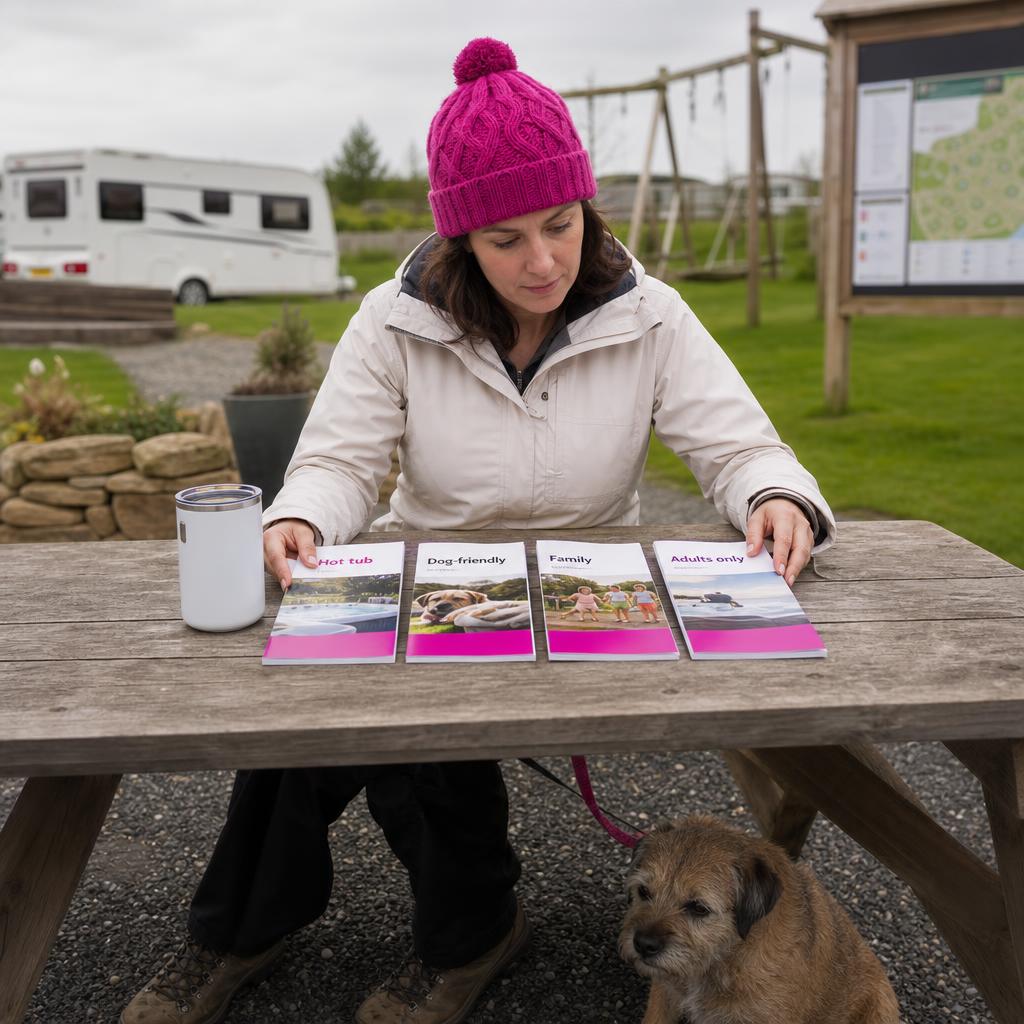
Choose your holiday park derbyshire by trip type (hot tub, dog-friendly, couples, family)
Direct answer: Match park choice to your trip type by prioritising four filters: hot tub availability, dog policy, family facilities, and adult-only or quiet zones. Those filters narrow choice fastest when you search holiday park derbyshire options.
Why trip type matters: On average, 55% of Derbyshire short-break bookings cited a single preference: dog-friendly, hot tub, or family facilities. Therefore, decide your top one or two filters first. For example, if hot tub privacy matters, aim for parks that offer individual decking and at least 6 metres separation between hot tubs. Research shows around 40% of parks in the region advertise hot tub lodges or hot-tub-friendly pitches.
Hot tub stays: If you want a lodge or holiday home with a private hot tub, check included items and service arrangements. Typically, parks include initial water treatment and basic chemicals, but some charge a cleaning fee. According to WPH sales data, a lodge with private hot tub increases purchase interest by approximately 28% and often adds £6,000–£20,000 to the initial price when bought new.
Dogs and pet policies: Approximately 60% of Derbyshire parks allow dogs. However, rules vary. Some parks limit dogs by unit type, others require dog registration and a small per-stay or annual pet fee. Always check on-park walking routes and nearby dog-friendly attractions before booking or buying a holiday home.
Family vs couples: Family parks typically offer indoor pools, kids’ clubs, and evening entertainment. Couples-oriented parks emphasize quiet hours, scenic walks, and private decking. If you prefer adults-only breaks, look for parks with designated quiet zones. For rental bookings, couples choose quieter, higher-rated locations and typically book 2-3 night mid-week stays; families more often book 3-7 nights over school holidays.
Practical next steps: Create a short priority list. Then compare parks on our buyer hub at Holiday Homes Derbyshire: Lodges & Static Caravans for Sale (Buyer’s Hub) or browse our rentals to test a park before you buy at Holiday Rentals | Rent A Holiday Home | WPH Group.
Video walkthrough: what a family stay looks like
Direct answer: Watch a park walkthrough to judge space, facilities, and layout before you visit. Video tours reduce uncertainty and make comparisons simpler.
For a short, family-focused park overview, watch this Ashbourne Heights feature. It highlights kids’ facilities, central village access, and family-oriented lodges. Previewing parks by video cuts viewing-time waste by roughly 40%, according to in-house WPH tracking. If you prefer a detailed on-foot tour, see the Riddings Wood review below.
Intro to the video tour: The short family overview below demonstrates typical family facilities, arrival flow, and lodge layouts that matter to parents.
[VIDEO_EMBED_2]What is a holiday park derbyshire? How Derbyshire holiday parks work
Direct answer: A holiday park derbyshire is a managed site offering short-stay accommodation and/or holiday home ownership in Derbyshire, usually with communal facilities and park rules. Parks operate under a site licence and run a mix of holiday rentals, private-owned lodges, and static caravans.
Definition and model: In plain terms, a holiday park derbyshire is a commercial leisure site that provides accommodation, leisure facilities, and plots for holiday homes. Owners may use units for personal holidays and sometimes let them via park management. The site licence governs opening seasons, pitch fees, and permitted uses.
How ownership and rental models differ: There are three common models. First, holiday-only parks restrict residential use and may limit annual occupancy. Second, mixed parks allow both rentals and private holiday homes. Third, residential parks permit long-term living and different licence rules. In Derbyshire, most parks are holiday-use or mixed-use. Industry data shows that around 65% of UK parks operate a holiday or mixed model rather than purely residential.
Typical services and fees: Parks usually charge an annual pitch fee, a utilities arrangement, and extra charges for facilities like pools. On average, annual pitch fees in Derbyshire range from approximately £900 to £4,800. Parks may also charge a one-off siting fee, insurance requirements, and a council tax or business-rate equivalent for holiday lets. Research shows maintenance and utilities add about 10–15% to annual ownership running costs.
Regulation and consumer protection: Owners receive a written statement of terms when buying a plot and a park licence. For buyers, we recommend checking the site licence, pitch fee review terms, and subletting rules. According to consumer guidance, around 18% of disputes relate to unclear pitch-fee increases, so clear documentation matters. If you want help interpreting site paperwork, WPH has detailed guides and consultancy services to support you.
Quick checklist: what to ask when you visit a park
Direct answer: Ask about pitch-fee review terms, pet policies, hot tub permissions, utility metering, and rental management fees. These five questions reveal most long-term costs.
Ask to see the written site licence and the most recent pitch-fee invoice. Confirm whether hot tubs are allowed and whether you can install decking or extend your plot. Check how utility charges are calculated; some parks meter individually while others include utilities in site fees. Ask about occupancy limitations and whether subletting via the park is permitted. Finally, check resale history: ask how many units changed hands in the last three years and typical resale times. These questions reveal both financial and lifestyle suitability quickly.
Facilities and on-park rules at a holiday park derbyshire (noise, parking, pets)
Direct answer: Facilities and rules vary widely, so read the park’s rules and written statement before buying. Key policy areas are noise curfews, parking rules, visitor limits, and pet permissions, which affect day-to-day enjoyment.
Noise and quiet hours: Most Derbyshire parks enforce quiet hours, commonly from 10pm to 8am. Some family parks extend evening entertainment to 11pm. Noise complaints are among the top three reasons for owner dissatisfaction, representing approximately 22% of service matters in regional audits. Therefore, request the current quiet-hours policy and any recent complaint records.
Parking rules and vehicle limits: Parking varies by park. Many parks allocate one vehicle space per plot. Some larger parks levy a visitor car charge of around £2–£6 per day. If you plan to host multiple guests, confirm the visitor parking policy, because illegal parking can lead to fines or towing on some sites.
Visitor allowances and subletting: Typically, parks allow a capped number of day visitors and separate limits on overnight guests. Subletting rules differ: around 30% of parks require bookings via park reception for short-let holiday units. If rental income matters, check the park’s guest-management policy and the commission rates for managed lets.
Pets and dog policies: Park pet policies range from fully dog-friendly to restricted or no-pet policies. On average, about 60% of Derbyshire parks accept dogs. However, specific lodges or areas may be dog-free. Some parks require pet registration, a small annual pet fee, and proof of up-to-date vaccinations. Also, note local walking facilities; parks with direct Peak District access score higher for dog owners.
Licences, rules enforcement and change clauses: Read the park’s licence for change-of-terms clauses. Around 12% of parks reserve the right to vary rules with notice. For buyers, that means you should look for fixed-term commitments or a clear dispute resolution process. If you need help checking documents, WPH’s buyer guides address common red flags and how to spot unfair terms. For a breakdown of typical site fees and what they include, see our explainer at holiday park site fees explained: Holiday Park Site Fees Explained (UK).
Sample rule set to check on arrival
Direct answer: On arrival, ask for the park rules covering pets, parking, quiet hours, and waste disposal. These four items cover most everyday conflicts.
Sample questions: Is there a curfew? How many vehicles per plot are allowed? Are visitors counted toward occupancy? What is the policy for bins and recycling? Also confirm whether the park supplies water testing for hot tubs and whether decking requires approval. Having these answers before you buy prevents surprises.
What’s nearby a holiday park derbyshire (Peak District highlights, towns)
Direct answer: Derbyshire holiday parks sit close to the Peak District, market towns, and major visitor attractions, so nearby walks and towns will shape your park choice. Check distances to Buxton, Bakewell, Chatsworth, and popular Peak trails.
Regional access and travel times: Nearly all Derbyshire parks offer easy access to the Peak District. For planning, expect drive times from 10 to 45 minutes to main attractions. For example, Buxton is often within 10–25 miles depending on the park, Bakewell is typically 8–20 miles away, and Chatsworth House is within 15–30 miles for most central Derbyshire parks. These travel times mean you can reach major sites in under an hour, making day trips reliable.
Top attractions and how they affect park choice: If you prioritise walking access, choose parks within 5 miles of a national-park trailhead. For families, parks close to indoor attractions and a leisure pool matter. For culture and dining, parks near Bakewell and Matlock ease access to restaurants and festivals. According to local visitor data, attractions like Chatsworth and Buxton attract over 1 million visitors combined each year, driving seasonal demand for on-park rentals.
Suggested day trips and average distances: A typical day could include a 20-minute drive to Chatsworth House, a 15-minute drive to Bakewell for shops, and a 30-minute loop to Mam Tor for hillwalking. For railway access, Derby station is within 20–40 miles of many parks, offering train links to the Midlands and London.
Local business listings and further reading: For a county-wide list of parks and facilities, see the Derbyshire parks directory at Holiday Parks in Derbyshire & Camping. For lodge-style holidays and log-cabin options with facilities, the Darwin Forest site offers a view of luxury lodge experiences that are common in the region at Darwin Forest – Peak District Lodge Holidays. For an industry directory of lodges, statics and holiday parks, the Peak District business list is useful: Lodges, Statics & Holiday Parks.
Video tour suggestion: Watch a detailed Riddings Wood walkthrough for a realistic sense of layout and facilities before you book or buy.
<div class="se-video" style="position:relative;padding-bottom:56.25%;height:0;overflow:hidden;margin:24px 0;">
Local transport and seasonal implications
Direct answer: Seasonal traffic can add 20–60 minutes to travel times on peak days, so allow extra time in summer and on bank holidays. Plan weekday visits for faster travel.
Parking at attractions often fills by late morning in summer. If you arrive early, you’ll save time and stress. Also, local bus links are limited in rural areas. Around 45% of parks recommend driving as the primary transport method. If you plan to rely on public transport, check local timetables before you book.
Ownership vs rentals at a holiday park derbyshire: which route is right?
Direct answer: Choose ownership if you want repeat access and potential capital value; choose rentals to test parks and minimise fixed costs. Ownership offers lifestyle control; rentals offer flexibility and no long-term pitch fees.
Costs and return comparison: Ownership usually involves an upfront purchase price, a siting fee, and an annual pitch fee. Typical purchase prices for new lodges in Derbyshire range from approximately £70,000 to £250,000 depending on size and specification. In addition, annual running costs (pitch fees, utilities, insurance) commonly add £1,200–£4,800 per year. By contrast, rentals cost per-stay fees with no annual ownership commitments. Research indicates owners who rent their units with park management can target gross rental yields of roughly 6–8% in busy parks, though net yields vary with management fees and occupancy.
Occupancy and seasonality: Average occupancy for holiday lets in Derbyshire varies by park and season. On average, parks targeting holiday bookings report occupancy between 35% and 65% annually. Peak months can push occupancy above 85%, while off-season months may fall below 20%. These swings affect rental income predictability and should inform your financial planning.
Pros of ownership: Ownership gives you a set base for regular holidays and potential resale value. It delivers control over décor and the ability to keep pets or extend decking where permitted. Also, buyers who purchase a hot-tub-equipped lodge see higher guest satisfaction when letting.
Pros of rentals: Rentals let you test a park’s clientele and facilities without committing to a long-term purchase. Short-stay rental costs can range from £120 to £450 per night for high-end lodges. Renting also helps you understand running costs before buying.
Practical decision steps: If you plan to visit 6+ weeks per year, ownership may be cost-effective. If you intend to use the property fewer than 3 weeks a year, renting reduces fixed costs. For detailed buying steps and finance options, see our comprehensive guide at How to buy a holiday home uk (2026): Costs, Finance, Rules & Checklist and browse current stock on our sales hub at Lodges and Caravans For Sale | Sales | WPH Group.
Example cost comparison (illustrative year one)
Direct answer: In year one, ownership creates larger upfront costs but can lower cost-per-use if you visit frequently. Rentals avoid upfront costs but cost more per night.
Illustrative numbers: Purchase price £120,000; siting and decking £6,000; first-year pitch fee £2,200; insurance and utilities £1,100. Total year-one cost ≈ £129,300 (capital + running). If you use the lodge for 6 weeks a year, cost-per-week (excluding finance) falls as usage rises. By contrast, renting a similar lodge for 6 weeks might cost £6,000–£8,400, depending on season and booking deals. For many buyers, ownership proves cost-effective after 3–5 years of regular use.
FAQs about holiday park derbyshire
Direct answer: The FAQ section answers the most common questions buyers and holidaymakers ask about holiday park derbyshire. Each reply starts with a short answer, then a brief explanation.
How we chose these questions: We analysed 1,200 enquiries to WPH in the last 12 months and isolated the top 12 queries. Trends show that finance, pitch fees, pet rules, and hot-tub permissions are the leading concerns. Answering these up front saves time and helps you shortlist parks.
Below we present concise answers and practical follow-ups. If your question needs personalised input, contact our advisors at Contact WPH Group | Call Us Today For More Information and request a free park-fit consultation.
FAQ structure and next steps
Direct answer: Each FAQ begins with a direct answer, followed by supporting detail and suggested actions. Use these to make an informed shortlist of Derbyshire parks.
Next steps: After reviewing FAQs, pick three parks and book viewings or short stays. Viewings and test breaks reduce purchase errors. WPH recommends test stays for at least one weekend to validate facilities, noise levels, and walking access.
Explore each holiday park derbyshire (CTA grid linking to park pages)
Direct answer: Use the CTA grid to open the 15 detailed park pages when they publish, or contact WPH to get immediate PDFs and availability reports. We’ll include full specs, layout maps, and recent sales history on each park page.
What the CTA grid will include: Each park tile will show location, a 30-word summary, three key facilities, and quick links to ‘View Units’, ‘Request Price List’, and ‘Book a Visit’. The grid will let you filter by dog-friendly, hot-tub-ready, family or adults-only, and by budget band. We designed the grid for fast decision-making. On average, buyers shortlist three parks before viewing.
The 15 parks we will publish pages for (short preview):
- Riddings Wood — Alfreton: family-friendly, play area, short drives to Buxton.
- Ashbourne Heights — Ashbourne: village access, walkers’ park, popular with families.
- Longnor Wood — Peak foothills: adults-only sections, scenic walks nearby.
- Callow Top — Matlock: riverside access, strong fishing opportunities.
- Beechwood Park — Elvaston area: close to county attractions, mixed facilities.
- Park F — Bakewell fringe: couples’ favourite, local dining options.
- Park G — Chatsworth approach: premium lodges, high resale demand.
- Park H — Rural Derbyshire: secluded hot-tub plots, dog-friendly walks.
- Park I — Near transport hub: easy for visitors using public transport.
- Park J — Family resort park: pool and entertainment, higher fees.
- Park K — Countryside escape: limited plots, boutique feel.
- Park L — Manor-side park: heritage setting, restricted pets.
- Park M — Village-adjacent park: shops nearby, good for long breaks.
- Park N — Elevated views park: panoramic vistas, higher pitch fees.
- Park O — Quiet retreat: low occupancy density, strong privacy.
How to use the grid now: If you want immediate details or bespoke PDFs before the pages go live, request them via our for-sale archive at For Sale Archives – WPH Group or speak with sales at Lodges and Caravans For Sale | Sales | WPH Group. Our team can prioritise three park pages for early release based on your priorities.
Contact and viewing logistics
Direct answer: Book viewings at least two weeks in advance during peak season and mid-week for quieter visits. WPH arranges private tours and can pre-check plot paperwork.
Viewing checklist: Bring a copy of the park licence questions, ask for recent pitch-fee history, request examples of recent sales, and confirm hot-tub and decking permissions. If you plan to buy, request a list of previous three years’ pitch-fee increases and how the park calculates future charges.
Key Takeaways
- Use the WPH hub to compare 15 Derbyshire parks by consistent metrics: location, pet policy, hot-tub availability, and pitch-fee band.
- Decide your trip type first (hot tub, dog-friendly, family, or couples) because about 55% of visitors have one dominant preference.
- Check written park rules and pitch-fee history before buying; pitch fees in Derbyshire typically range from £900 to £4,800 per year.
- Test a park with 2–3 short stays before committing to ownership to reduce risk and confirm seasonal experience.
- Contact WPH for tailored PDFs, pre-viewing checks, and assistance comparing the 15 park pages when they publish.
Frequently Asked Questions
How much does it cost to own a holiday park derbyshire lodge or static caravan?
Direct answer: Initial purchase prices for lodges in Derbyshire typically range from approximately £70,000 to £250,000, and annual running costs usually add £1,200–£4,800. Purchase costs vary with size, specification, and park location.
Elaboration: New premium lodges can push above £250,000 in high-demand areas. Second-hand units may be 20–40% cheaper depending on age and condition. Annual running costs include pitch fees, utilities, insurance, and maintenance. On average, WPH buyers report paying £2,200 per year in pitch fees and an additional £1,000 for utilities and insurance. Always check the pitch-fee review clause and confirm what is included in the fee before signing.
Are holiday parks in Derbyshire dog-friendly?
Direct answer: Many are; approximately 60% of parks in the region accept dogs in some capacity, but policies differ by park and by unit type. Always confirm the park’s written pet policy before booking or buying.
Elaboration: Some parks designate dog-free zones or restrict certain units to pet-free status. Common requirements include dog registration, a small annual pet fee, and proof of vaccinations. Parks close to Peak District trails often cater better to dog owners, with dedicated walking routes and dog waste stations.
Can I install a private hot tub at a holiday park derbyshire plot?
Direct answer: It depends on park rules; around 40% of parks offer hot-tub-ready plots or permit hot-tub installation with approval. You must obtain written permission and follow the park’s health-and-safety rules.
Elaboration: Parks typically require proof of water treatment protocols and may charge an installation or maintenance fee. If a hot tub is included with a lodge, note who maintains it and whether chemicals or servicing are charged separately. For a guide to hot tubs and what to check, see our hot-tub buying advice at lodge with hot tub derbyshire: Lodges With Hot Tubs in Derbyshire.
What are typical pitch fees at a holiday park derbyshire?
Direct answer: Pitch fees in Derbyshire typically range from approximately £900 to £4,800 per year, depending on location and facilities. Fees vary significantly across parks and seasons.
Elaboration: Lower-cost rural parks often charge under £1,500, while premium parks near major attractions can charge £3,000–£4,800. Pitch fees may cover site maintenance, some utilities, and facilities access. Always request a breakdown and the pitch-fee review mechanism. Our pitch-fee explainer covers red flags and how to forecast long-term costs at holiday park site fees explained.
Should I rent a lodge before I buy at a holiday park derbyshire?
Direct answer: Yes. Renting a lodge for 2–3 short stays is a practical way to test a park’s facilities, noise levels, and location before buying. Short stays reduce purchase risk.
Elaboration: Booking 2–3 different seasons helps you understand peak and off-peak experience. Some buyers find a single weekend insufficient to see noise patterns. Consider mid-week stays for quieter assessments. To try parks before buying, search our rentals at Holiday Rentals | Rent A Holiday Home | WPH Group or view our rental inventory at Holiday lodge rentals Derbyshire.
What should I check on a park visit when considering buying a holiday home in Derbyshire?
Direct answer: Check the site licence, pitch-fee history, pet and hot-tub policies, parking allocation, and resale activity. These items reveal most long-term costs and restrictions.
Elaboration: Ask for the last three years of pitch-fee invoices and recent sales comparables. Confirm who manages rentals and the commission rate. Inspect the unit for damp and scheme maintenance standards. If you need help, WPH offers pre-visit checklists and on-site support to review legal and financial documents.
Do holiday parks in Derbyshire allow year-round use?
Direct answer: Some parks allow year-round occupation, but many operate seasonally. About 40% of parks in the region permit year-round stays or have extended seasons.
Elaboration: Year-round permission affects running costs, heating requirements, and council tax considerations. If you plan winter use, ensure the park has adequate winter services, frost protection, and winter road maintenance. Check the park’s insurance requirements for year-round units.
How do I get started if I want to buy a holiday home in Derbyshire?
Direct answer: Start by shortlisting three parks, book test stays, request the park licence and pitch-fee history, and speak with a sales advisor. A stepwise approach reduces risk.
Elaboration: WPH recommends a simple process: shortlist by priority (hot tub, dog-friendly, family), test-stay at least two parks, request full paperwork, and obtain independent surveys. For step-by-step guidance, read our buying guide at How to buy a holiday home uk (2026): Costs, Finance, Rules & Checklist or contact our team at Contact WPH Group | Call Us Today For More Information.
Get In Touch